


By Sanjea Taylor, World News Editor
The Bald Eagle has always been seen as a powerful symbol of American history, freedom and independence; however, they once faced the threat of endangerment. Now as 2026 begins, a new era is starting: One where this remarkable national bird is making a huge comeback, including in the skies of Missouri.
According to KMBC News, experts observed an astonishing 1,012 Bald Eagles at Missouri’s Loess Bluffs National Wildlife Refuge during the annual migration on Dec. 30, 2025. Although some have since left, the refuge remained home to at least 500 Eagles as of Jan. 6—an astonishing sighting that has rarely been seen in one location.
Upon hearing this amazing news, both Dr. Cheryl Berry, a biology professor in the Department of Natural Sciences and Dr. Christopher Miller, a professor of biology and ecology at Saint Leo University, decided to share their thoughts on this sighting.
“Wow! That’s a lot, although really not surprising in some ways,” said Miller. “They’re a very adaptable species, actually. I occasionally see them over Lake Jovita and even in urban areas.”
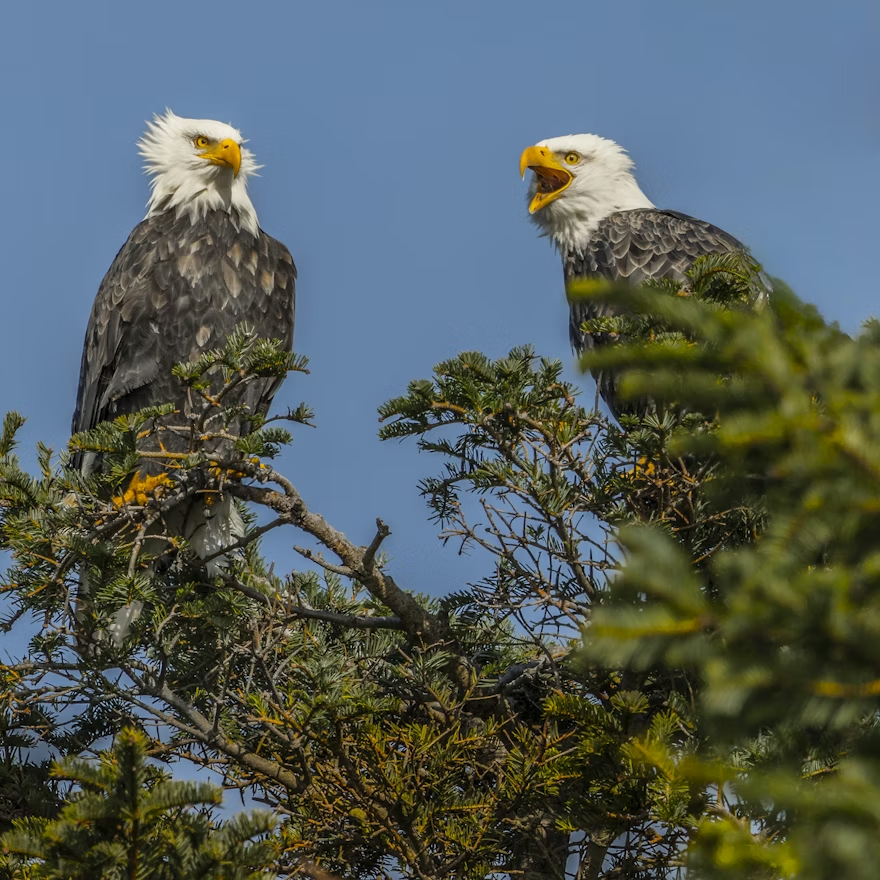
Similar to Miller, many are shocked and happy by the news that these birds are thriving today, especially because in the past there was a decline in their numbers. In fact, The American Eagle Foundation reported that the Bald eagle was listed as endangered from 1967 to 1995 in 43 states.
“Populations of Bald Eagles began to decline due to similar reasons most wildlife numbers decline, which is habitat loss and lack of laws to regulate hunting/killing the animal,” said Berry.
“Also, I think the biggest decline was due to the use of DDT [dichloro-diphenyl-trichloroethane], a widely used pesticide,” said Miller, “which interfered with reproduction because the eggshells of many raptors/birds of prey were thin and often broke open before hatching, and, thus, resulted in the premature death of unhatched chicks.”
Despite this, the U.S. Fish and Wildlife Service reported that on June 28, 2007, bald eagles were later taken off the list of threatened and endangered species after there was an estimate of at least 9,789 nesting pairs of bald eagles in the United States, with many questioning how this was possible.
“One of the biggest steps forward was the banning of DDT in this country. Once the pesticide was no longer present in such high concentrations in waterways and wetlands, the eagle’s population recovered,” said Miller.
“Populations of bald eagles gained further protection with the Endangered Species Preservation Act, which became law in 1967 followed by the Endangered Species Act (ESA) in 1973,” added Berry.
The restoration of these iconic birds’ population is so impactful as it marked the beginning of one successful wildlife recovery in the United States. These recording-breaking bald eagle sights show that the current health of these species is far stronger than what many might think.
“The health of the population is very good, but this is due to focused and purposeful conservation efforts,” said Miller. “The eagle is protected by a number of federal laws, and most Americans are familiar with and value this species.”
“It’s a shame that we can’t extend those same values to many other species that are endangered or threatened. Bald eagles are actually quite adaptable, but many, many species have critical habitat needs that require protection,” added Miller.
With the health of the population of bald eagles getting stronger, and more sightings occurring, it just makes the news about these national birds all so interesting for many bird lovers. In fact, KOMU 8 reported that there was another bald eagle sighting in south-western Missouri—this time of a rare white bald eagle, which was also very exciting and shocking.
“That is interesting. I assume it was an albino, perhaps, or leucistic form, meaning the individual eagle has a rare mutation,” stated Miller. “It illustrates that if the population of the eagle is large enough, albino individuals can appear in the population.”
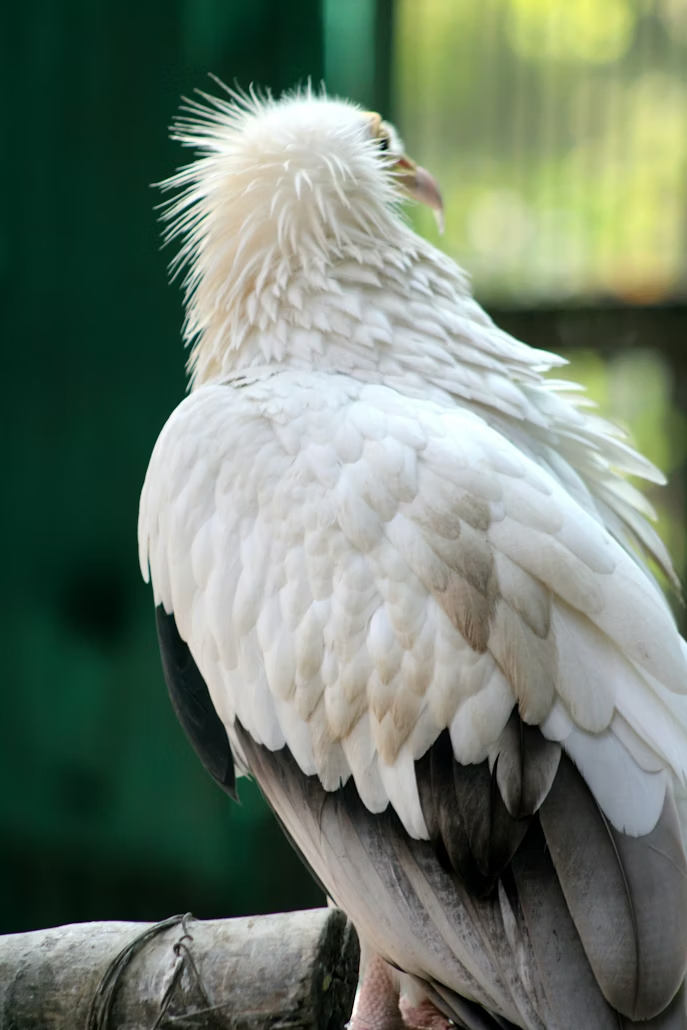
“It is not that surprising an individual with this mutation [albinism or leucism]would be observed in Missouri during a time where there are a high number of birds in congregation due to wintering, as mutations do naturally occur in all natural populations. This sighting is a very exciting observation for bird watchers and the general public due to its rarity,” said Berry.
Sightings like this show how important it is for schools like Saint Leo to observe, study and learn more about wildlife conservation successes. By learning more about these and other animals, this can help build a greater awareness in the campus community and encourage students to become more involved in protecting local wildlife.
“In my opinion, the recovery of the bald eagle populations is a testimony to the benefits of proper wildlife management and conservation efforts. It also provides hope for the same outcome for many other wildlife populations if we learn from past failures and success in managing our natural environment,” stated Berry.















1 Comment
My sister lived in Troy, Missouri for 30 years. As she drove towards Wentzville on Rte 61 she could see an eagle’s nest west of the highway. There’s a stream or river very near there, making it an ideal site for eagles. I even saw that a storm had blown the nest down, but the birds had rebuilt the nest. We’ve been seeing that nest and the eagles for years!