


By Faith Skierkowski, Copyeditor
Somewhere in between late-night conversations and lecture halls, catching up at Benedicts or catching the free shuttle service, we learned so many things that no syllabus promised to teach us.
We come to college expecting a heavy workload of assignments, tests, and exams, and hoping for a decent sleep schedule, but we leave campus with so much more than the education we learn from our textbooks.
From the first day of classes, there was always a “hidden syllabus.” Maybe it’s not one we could physically see or hold, but we learned the unofficial things that college teaches us, like how to deal with uncertainty, whether that may be waiting on a grade to come back on an assignment, or if taking a certain class will boost your GPA. Along with time management, though, comes the need to build a schedule, or maybe you learned that through failure or lack of planning.
Learning to advocate for yourself as a student allows you to reach your goals, and the way you successfully execute your plans is a strength you can carry with you, whether you plan to attend graduate school after graduation or are stepping into the career world.
“I think that I have become a little more social on campus. I was pretty shy when starting, but over time, I have grown closer with my peers and have been able to gain valuable experiences as both a student and person, said Emma Garrett, a junior majoring in English.
College also teaches us about relationships, whether those are platonic or romantic. Saint Leo University is full of students from all around the world. They say we make our true friendships in college, which stick with us for a lifetime.
Whether your relationship was brought together by a group project that paired you together, or having lunch in the dining hall around the same time, or even having a roommate with whom you do everything, from enjoying meals, grocery shopping, to even doing laundry. Each of these memorable moments brings you closer to recognizing how friendships work and shape your college experience.
Learning to branch out and build relationships while staying in your comfort zone and learning to set boundaries allows for friendships to be made, both professionally and informally.
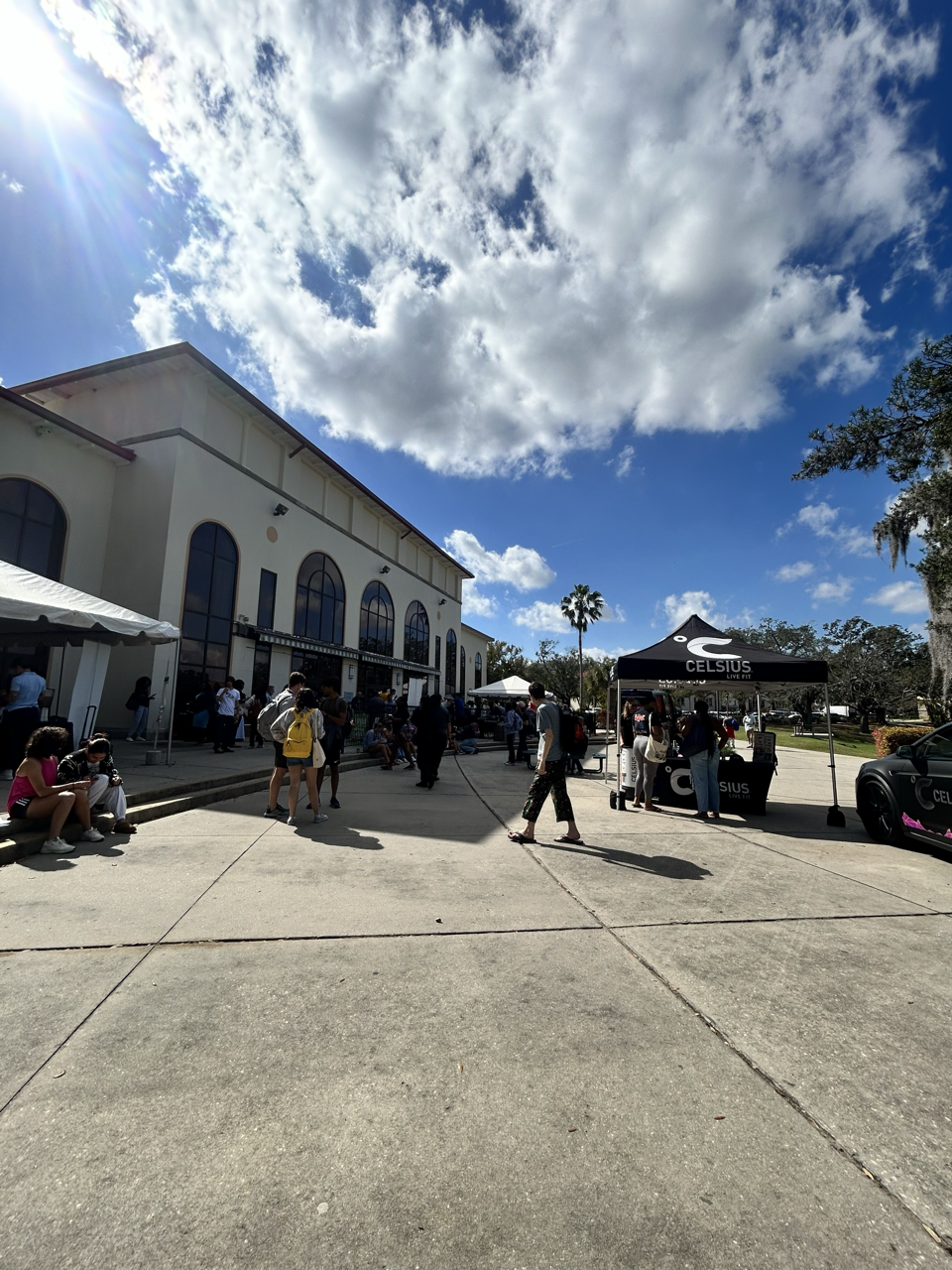

“I would advise freshmen to put themselves out there and join a club or even try to create your own. There are plenty of groups you could participate in that can even lead to fun and professional opportunities off campus,” said Garrett.
Learning to adapt is one thing that all of us do, sometimes without even realizing it.
We sign up for a club or take a class outside of our major that we might not be fully comfortable with. Adjusting to these unexpected tasks or challenges allows us to grow and mature, not just as students, but as empowered adults.
We become flexible and able to recognize how to handle situations that we think might lead to failure, but at the end of the day, failure is one of the greatest learning experiences and a foundational part of success. We build resilience and conduct reality checks that foster self-improvement.
The pressure to have it all figured out by watching those around us can feel very intimidating, constantly questioning if you are “where you should be” in your career, academics, or social life. But the truth is, there is no exact answer.
We learn that uncertainty in life is normal and that it isn’t healthy to compare ourselves to others. Some friendly competition is always good, as it motivates us to want to improve, but we shouldn’t assume that the best-dressed, professional student “has it all figured out”.
We all go at our own pace, the one that feels most natural to us.
Whether you’re looking for guidance from fellow peers or friends, there is always a faculty member right around the corner who is willing to offer a helping hand or advice on what steps you can take next.
Dr. Elizabeth Aiken, full professor of English, explains what she hopes students learn isn’t in her syllabus: “My goal in every class is to have students experience a sense of curiosity and respect for the discipline and subject matter, even if the class itself outside of their major or professional interests,” said Aiken.


“I also hope students take away from every class an idea of how the content material can enrich their lives, and that they’ve encountered something in the class that meant something to them personally,” continued Aiken.
Whether you attended Saint Leo University for two, three, or the full four years, the most important thing you take with you is your identity, or at least pieces of it. College is a space, and sometimes the first for many, where you choose who you want to be.
You set boundaries, establish goals, interests, values, morals, have those difficult conversations, and find your voice. The time you spend at Saint Leo teaches you how to pivot, recover, succeed, and keep going.
College teaches you how to live, not just how to pass a class.