

By Elijah Penn, Copyeditor
Already this year, Florida has seen numerous wildfires erupt across the state. Now these Floridians are wondering what factors have led to increased wildfires this year, and how officials are fighting them.
In February, over 35,000 acres in South Florida in the Big Cypress National Preserve burned. In late March, many Hernando County residents were forced to evacuate after over 100 acres of preserve land near Hernando Beach caught a blaze.
Brian Pinson, Pasco County Parks, Recreation, and Natural Resources site supervisor for Crews Lake Wilderness Park, is a certified Florida Burn Manager and is a strike team leader and engine boss. Pinson was among those who responded to the wildfire in Big Cypress National Preserve.
To contain wildfires, Pinson explained, officials try to create a “box” using natural barriers that don’t burn, such as logging roads or canals. These boarders are used as a line of defense, in hopes of stopping the fire from spreading beyond them.
By the time Pinson responded to the scene, the fire had already spread to 10,000 acres. He was assigned to the southeastern side of the wildfire, which was burning quickly southward.
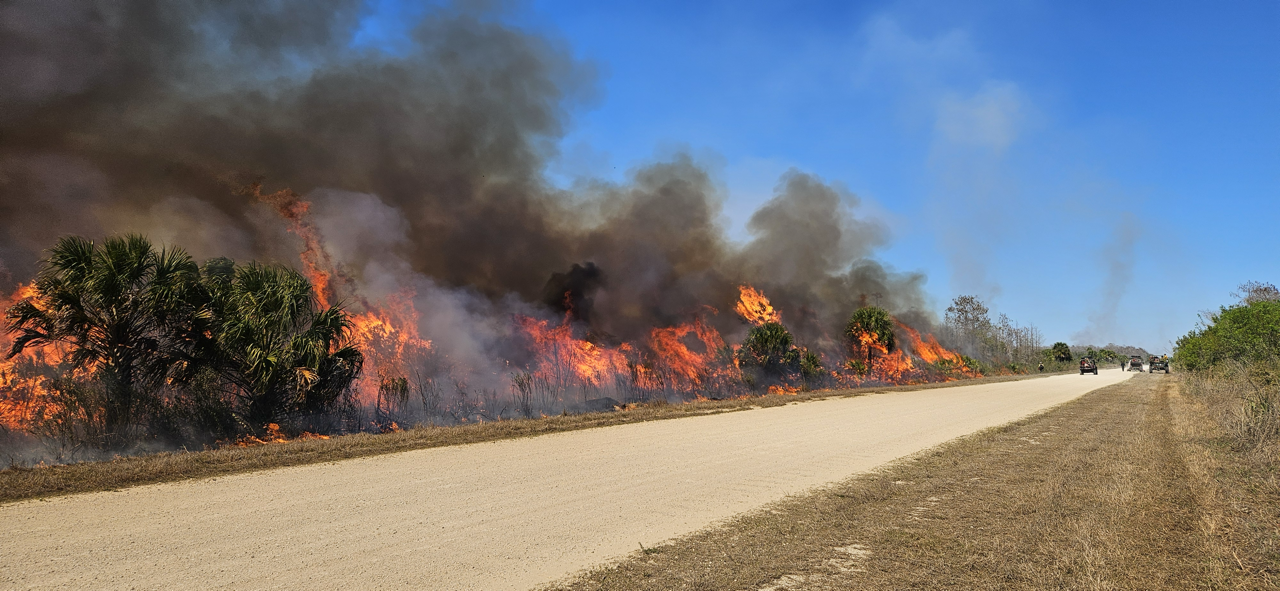
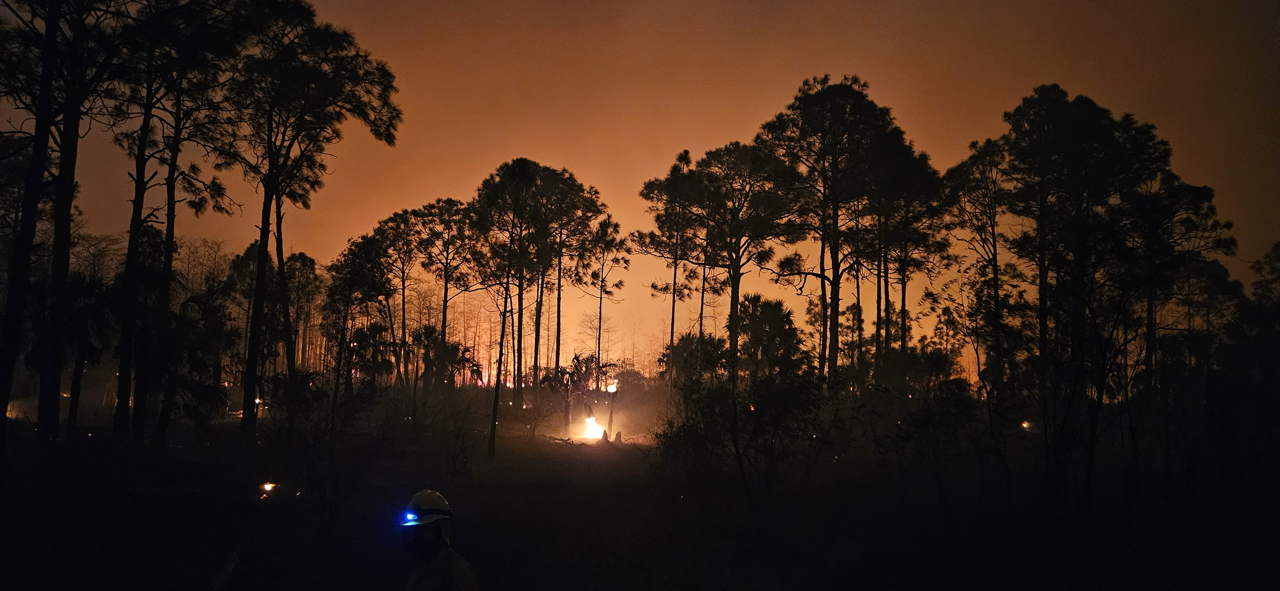
“Our job was, if we needed to, to fight fire with fire,” remembered Pinson.
Pinson’s group was charged with starting a counterfire near one of the roads or canals. This fire would be designed to steal energy from the wildfire.
“As this wildfire is approaching it, we light a fire, and the two [fires], they’ve got so much energy they’re fighting for oxygen, they pull each other together,” Pinson stated.
“So, once they meet in the middle, they just go out. There’s no more fuel; we eliminated the fuel source as the fire is running towards us,” Pinson added.
Pinson has worked with prescribed burns for 22 years and has served in wildfire response for 15 years. During this time, Pinson has helped fight wildfires across the nation.
Pinson became a Park Ranger in 2000, recalling that there were not many classes on prescribed burns, especially in Florida. When Pinson saw the ecosystem rebounding from a prescribed burn, he decided it was something he wanted to do in his career.
“It was the best tool I’d ever seen used to restore ecosystems, because we’re just mimicking nature. So I guess, in short, seeing the immediate results of something that seemed that catastrophic was really intriguing to me,” said Pinson.
Pinson explained that Florida wildland is what’s known as a “pyric ecosystem.” Unlike many ecosystems, fire is required for the health of wild Florida habitats.
“Most of the habitats in Florida have evolved to depend on fire,” said Pinson, “There’s plant species—plant and tree—that will not propagate if they’re not burned.”
However, although these pyric systems need fire, not all fires are beneficial to the environment.
“Prescribed fires are very beneficial. Wildfires are a byproduct of not having prescribed fire … They’re just going to sweep through, and they’re catastrophic,” said Pinson.
Indeed, responsible use of prescribed burns helps to prevent those catastrophic wildfires. When an area is burned, it reduces the fuel that could later be set ablaze by natural circumstances or human carelessness.
While prescribed burns are specifically controlled to benefit the environment by regulating the intensity and energy of the fire and the time it remains in an area, wildfires are driven by the wind and are often too intense for the habitat, killing off trees and negatively impacting wildlife populations.
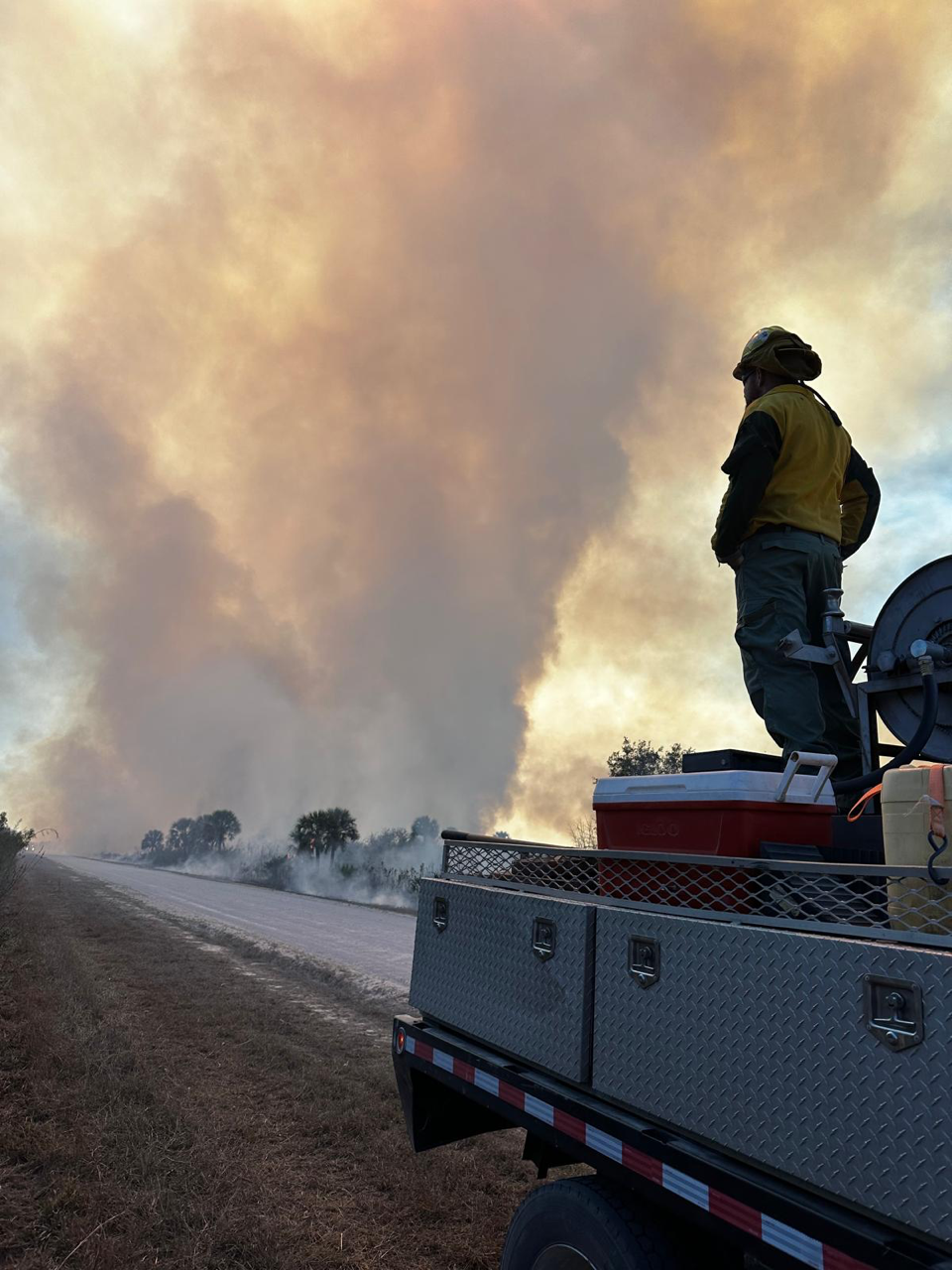
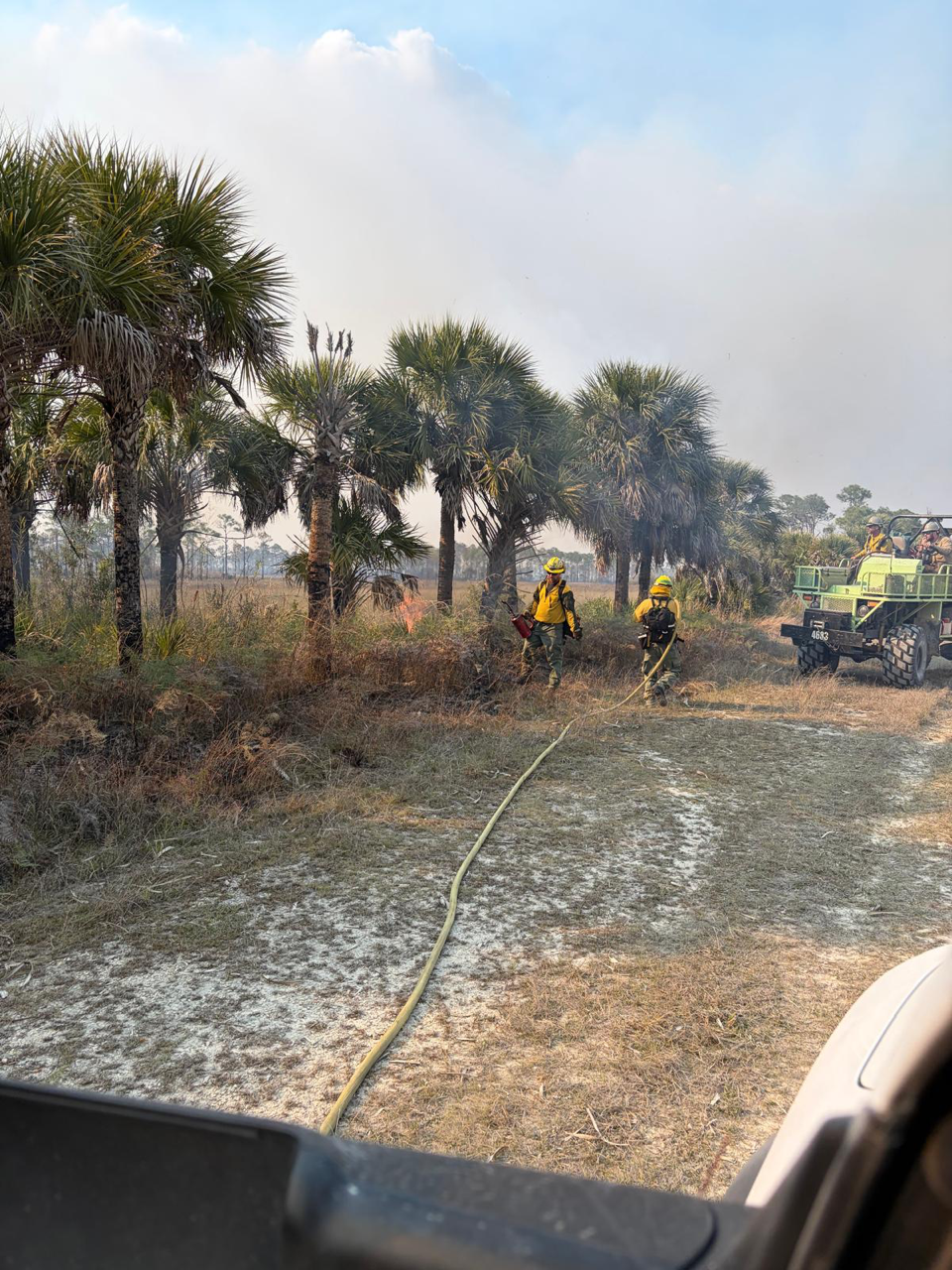
The primary benefit of prescribed burns is to kill off many dominant species that would otherwise take over a habitat, especially invasive plant species. This promotes biodiversity.
“It really kind of moves the needle and resets the clock. … If you picture two trees growing at the at the same height, with bushes underneath, eventually the trees are going to get tall enough, the sun’s not going to hit the forest floor, the bushes are going to die out,” said Pinson.
“Biodiversity in plants means more biodiversity in animals, insects, critters of all sorts … After that fire moves through, it increases the biodiversity,” Pinson stated.
The effects of the fire also increases the carbon offset and permits water to flow through the ecosystem more effectively.
This year has already seen a far greater number of wildfires than last year. Pinson argues that it is because of a lack of prescribed burns last year due to flooding from the prior year’s hurricane activity, and extreme drought conditions, further preventing responsible control of burn management of land.
“The prediction is that as long as we’re on this dry trend, we’re not going to be able to do the prescribed fire, which means we’re not going to be able to reduce some of the overgrown ecosystems, which means are all way more receptive to wildfire in the future,” stated Pinson.