
By Hadassa Ferreira, Arts & Culture Editor
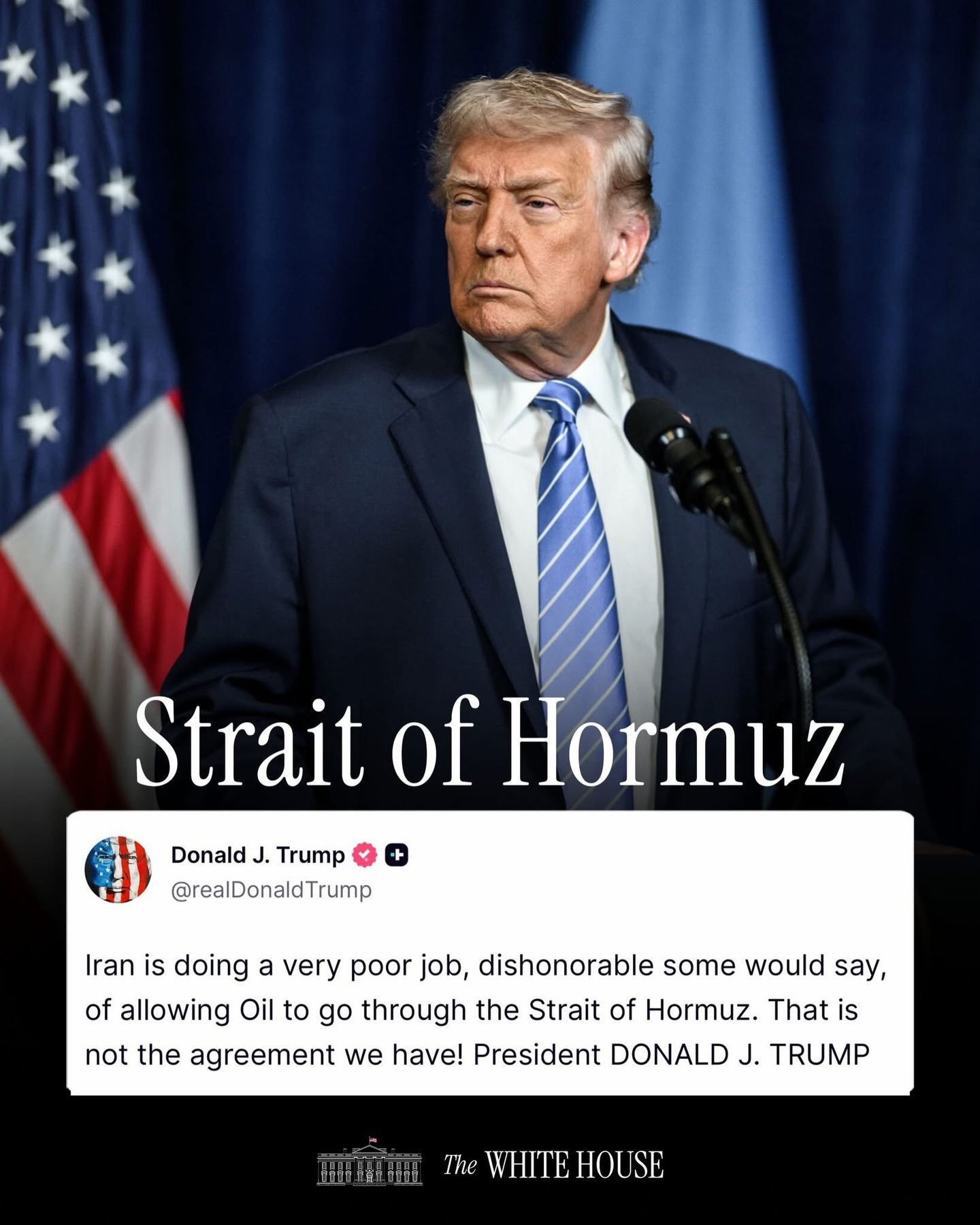
The world has been watching the conflict between Iran and the United States for a few months now, and Tuesday, April 7, the international community watched as a new development of this war occurred due to new statements posted by U.S. President Donald Trump on his social media.
President Trump stated on Tuesday that he would end “a whole civilization,” referring to Iran, if the state refused to open the Strait of Hormuz by 8 p.m. that day.
According to the New York Times, the president stated a list of sites, such as power plants, bridges, and even oil shipping routes, that he was prepared to strike if the Islamic Republic did not agree to open the Strait of Hormuz.
The Iranian people had multiple reactions to the threats made by the American President. While some reacted with certain indifference, arguing that they should continue with their lives, others did, in fact, position themselves at the sites that were threatened as the target of the attacks, as human chains.
Protests were held at those places, and people held Iranian flags, and posters that stated, “Attacks to electricity infrastructure are considered a war crime,” and even pictures of Ayatollah Ali Khamenei.
The New York Times stated that as the deadline that Trump established approached, the Iranian media started to promote information and guidelines on how to survive if power, gas, and water went out. At the same time, some residents of Tehran ran to stock up supplies, like water and food, while others fled the city towards the shore of the Caspian Sea.
According to The New York Times, many figures stated they were appalled by Trump’s comments, even Pope Leo XIV, who called the statements made by the President “truly unacceptable.” However, according to the New York Post, some commentators and conservative voices defended the President’s stance, arguing that his threats help restore U.S. deterrence and send a strong message to Iran.
“On one hand, it’s good that America is projecting strength to a government that has been kind to us and other nations. While America is showing strength to an allied nation, launching military action against Iran now seems short-sighted, ignoring long-term consequences like rising gas prices,” stated Luigi Meschino, the Student Government President, and a senior student majoring in Political Science.
The New York Times also stated that with Iran threatening to give up on negotiations and with the deadline imposed by President Trump, diplomatic efforts to reach an agreement unfolded.
Turkey, Egypt, Qatar, and China were the first to try to be mediators of the conflict, and Pakistan was the main mediator of the conflict. At the end, China played a crucial role in the negotiation, being able to break an impasse due to its close economic relationships with Iran.
China has been keeping close commercial ties with Iran, as the biggest purchaser of Iranian oil. Therefore, Chinese officials were able to ask Iranian officials to be more flexible and open the Strait of Hormuz for maritime navigation for two weeks, considering the economic impact of this war.
“I do not believe the U.S., at this time, has been able to be diplomatic enough when dealing with this situation. The peace talks haven’t worked, and I do feel our government is being taken for a fool trying to talk this out. The negotiations with the other side, they are not taking this seriously,” added Meschino.
According to the BBC, the Strait of Hormuz is an important piece in this war since it is a site deep enough to accommodate the world’s biggest crude oil tankers, being used by major Middle Eastern oil and LNG producers, and their customers all over the Western world.
According to the New York Times, after hours of negotiation, Pakistan’s Prime Minister called President Trump, saying that Iran accepted the Pakistan proposal. President Trump said that the U.S. would also accept and enter into a two-week cease-fire, and he agreed to suspend the bombing campaign to work on a peace agreement.
On Wednesday, though, all the efforts to reach an agreement fell through when disagreements over the agreement previously reached emerged. The New York Times stated that while Iranian officials understood that Lebanon was part of the agreement, the U.S. President understood the conflict in Lebanon, mainly with Hezbollah and backed up by Iran, as a completely separate situation.
Therefore, Iran accused the United States of violating the agreement by continuing the attacks on Lebanon, and kept the Strait of Hormuz fully closed, arguing that countries would be able to pass under Iranian coordination.
According to the Council on Foreign Affairs, after the conflict continued and no further agreements were reached, the United States started a blockade on traffic to and from Iranian ports in the Strait of Hormuz that took effect this on April 13.
From now on, the United States will intercept any ship in international waters that has paid Iran a toll. Regarding the cease-fire, President Trump said it remains in place and that Iran has not been attacked by the United States in recent days.