
By Elijah Penn, Editor-in-Chief
Just a few decades ago, Florida was the bellwether state in national elections. During the 2000 elections, Florida was the key swing state in George W. Bush’s presidential victory over Al Gore. Bush won the state by a shockingly low margin of 537 votes, a 0.009% difference.
Now Florida is no longer considered a “purple state,” and is written off as a Republican stronghold with GOP candidates racking up impressive victory margins in recent elections, such as Governor Ron DeSantis’ unprecedented 20-point victory over Charlie Crist in 2022, claiming over 1.5 million more votes than his Democrat challenger.
This shift began as the GOP was able to register more voters in the early 2000s, and DeSantis’ positioning of Florida as a “free state” during the COVID-19 pandemic attracted an influx of Republicans from states with more restrictions at the time.
Since DeSantis has reached the end of his legal consecutive terms, this year Florida will be voting in a new governor. Despite Republicans’ 1.5 million registered voter lead, Democrats are hopeful this governor’s race may break from the trend.
“Gubernatorial politics is one of my sustained research interests,” said Dr. Austin Trantham, assistant professor of political science who co-authored a research article on gubernatorial campaigning. “Governors are powerful political figures whose actions more directly affect citizens on a daily basis than members of Congress or the president.”
Trantham notes that Florida’s governor is one of the most constitutionally powered governors in the nation. Furthermore, Florida politics frequently lead policies in other Republican states.
“The Florida governor has a unique power that allows them to suspend state and local officials, including county sheriffs and school board members. Florida’s governor also exercises strong control on judicial appointments,” said Trantham.
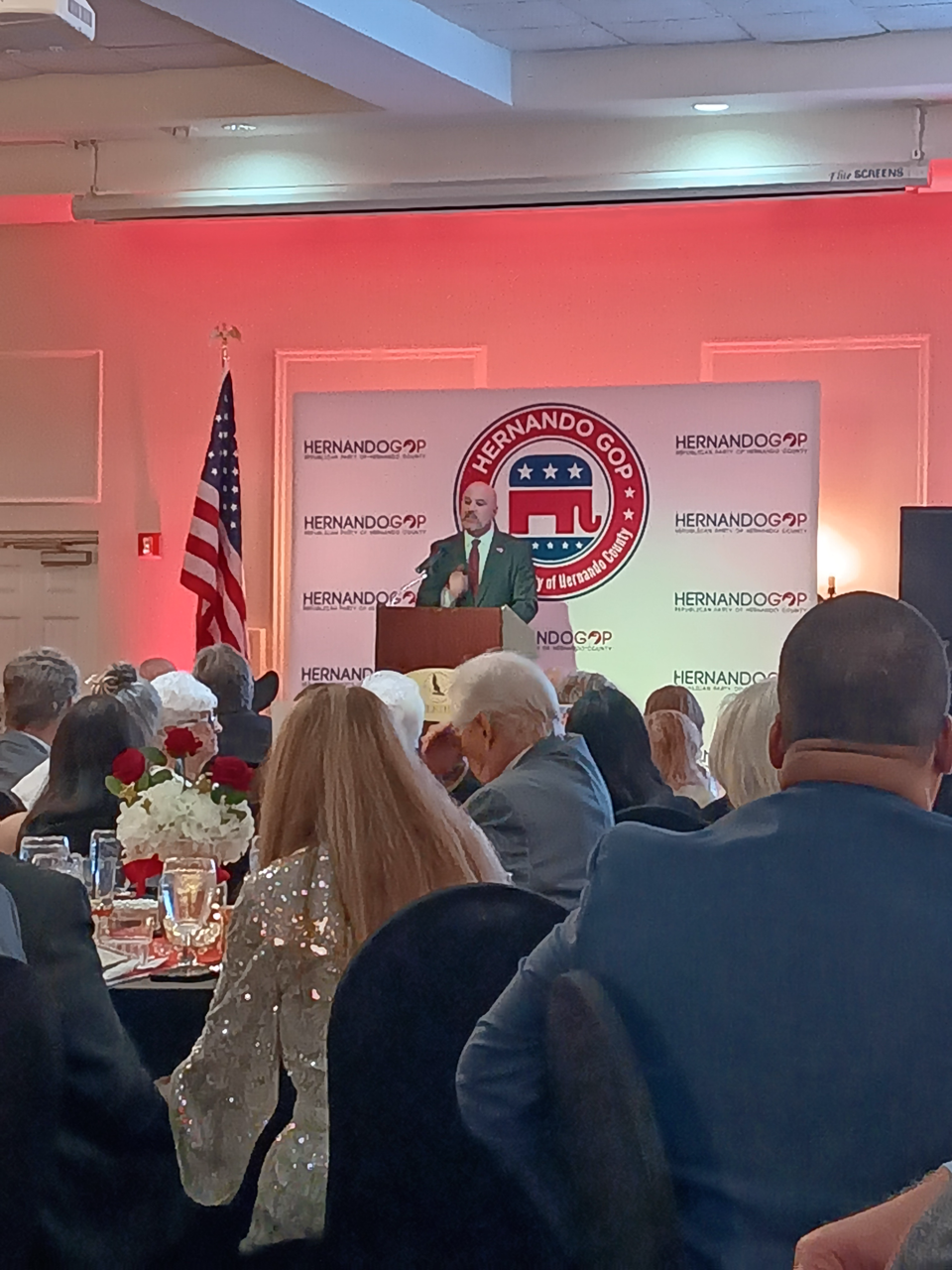
Congressman Byron Donalds (FL-19) won the divisive Republican primary with less than a majority of votes on a split ballot. Former Congressman David Jolly had a smoother path to victory in the Democratic primary, winning 61% of the vote.
When analyzing the Florida 2026 primary election, Trantham identified some themes that emerged.
“Endorsements still matter. Donald Trump publicly supported Byron Donalds in the Republican primary, and Trump’s endorsement still carries weight with GOP primary voters,” said Trantham. “The ability to raise and attract significant amounts of money is another important factor signifying electability.”
Many Republicans who voted against Donalds in the primary are discontent with results, and Jolly’s status as a former Republican appears to be attracting No Party Affiliation and moderate voters. Gubernatorial polls show Jolly quickly closing the gap on Donalds’ lead.
Historically, midterm elections are favorable to the party which does not hold the presidency. President Trump’s approval rating in Florida is at 40%. DeSantis voiced concern that many Republicans plan to sit this election out.
“If David Jolly wins the gubernatorial election or comes close, this would signify a popular backlash against the current president,” said Trantham.

Both Donalds and Jolly had significantly more financial backing than their opponents in their respective primaries. This factor could pose problematic to Jolly who currently has $15 million dollars compared to Donalds’ $115 million dollar campaign funding.
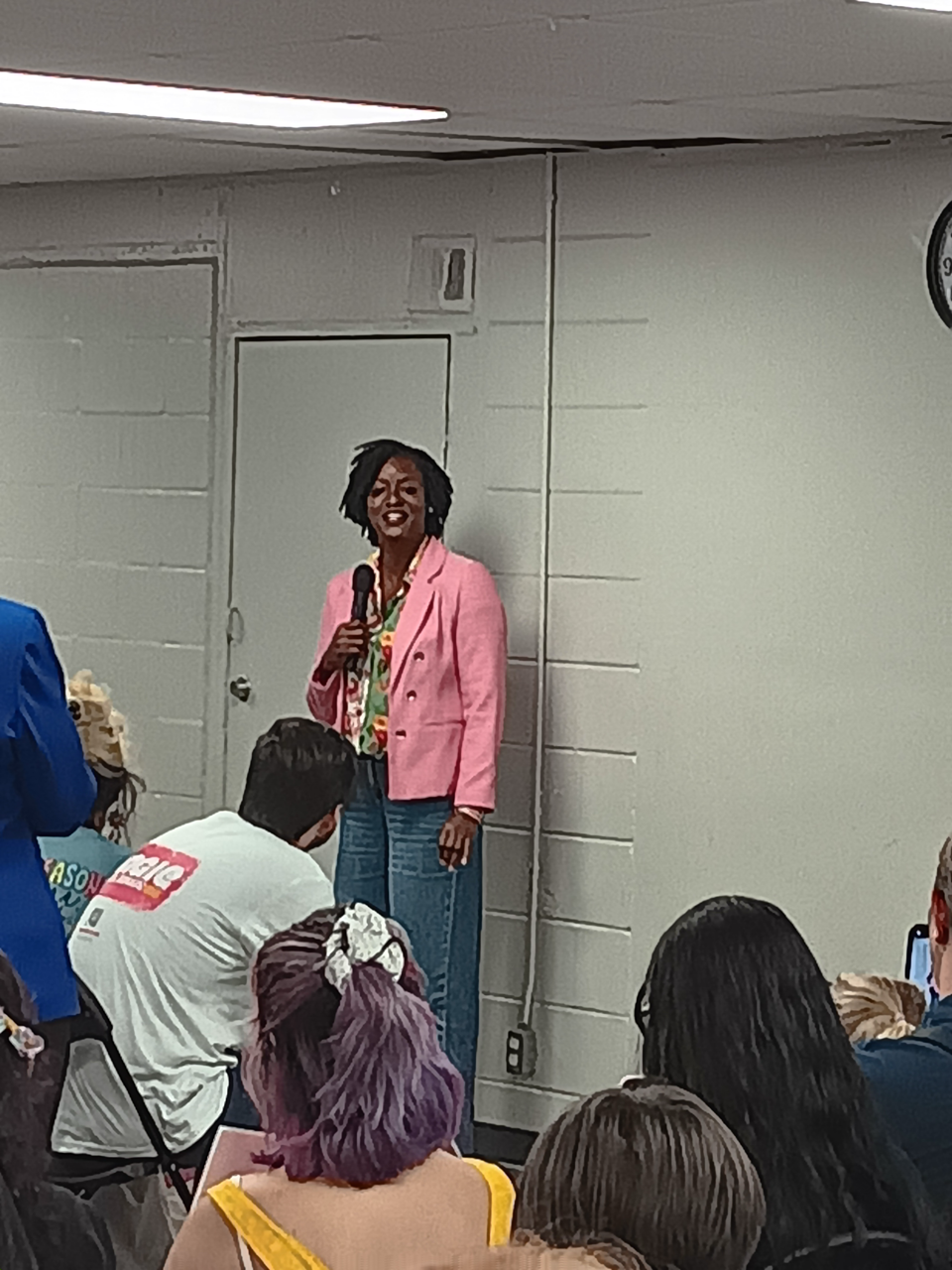
Unlike the gubernatorial primary, funding was not a deciding factor in the Democratic Senate primary. Angela “Angie” Nixon’s victory over her opponent, Alex Vindmin, in the Democratic primary was called the biggest upset of the Florida primary. Vindmin was nationally known for his role as a key witness in the 2019 Trump impeachment trial. His campaign raised $16.3 million to Nixon’s $1 million. Still, Nixon went on to win 56.1% of the vote.
Although the Florida U.S. Senate race looks much more favorable for Republicans, recent polling is still showing a shift in favor of Democrats. This election will be the first time that Incumbent Republican Asley Moody will face voters for this office after being appointed by DeSantis to fill Senator Marco Rubio’s vacancy after he was appointed by Trump to U.S. Secretary of the State.
Moody will test her approval with voters against Democrat Florida House Representative Nixon and No Party Affiliation candidate and legal reform advocate, Neil J. Gillespie.
Moody has been criticized for her role in the $10 million Hope Florida scandal as Florida’s Attorney General at the time. This scandal also plagues incumbent Republican James Uthmeier who will face Democrat Florida Senator Jose Javier Rodriguez in November.
On the other hand, Nixon has drawn criticism for her disruptive behavior on the Florida House Floor, resulting in her being fined by a judge and instructed to complete 15 hours of community service, and for identifying with the Democratic Socialists of America.
Another state-wide race opposed in 2026 is Commissioner of Agriculture and Consumer Services, where incumbent Republican and former Florida Senate President, Wilton Simpson, will go against Democrat Joey Mendoza Atkins, an attorney who specializes in representing migrant farm workers, and Write-In Kyle “KC” Gibson, a pastor who has run for governor in previous elections.
The Florida Chief Financial Officer race features Incumbent Republican and former Florida Senator Blaise Ingoglia and Democrat former Florida Senator Annette Taddeo. Like Nixon, Ingoglia has drawn criticism for his attention-seeking antics such as protesting cancel culture byproposing a bill to which would ban any political party that has officially supported slavery in Florida. If passed, this bill would have banned the Democratic Party in the state.
Trantham points out that the results of Florida’s midterm elections could determine how much money and effort the national Democratic and Republican parties are willing to spend in the future attempting to hold or take offices in a state that is considered a conservative stronghold.
“The state’s close gubernatorial race provides interesting insights for the future of the state and the nation,” said Trantham.