


By Hadassa Ferreira, Arts & Culture Editor.
Many international students arrive at the moment of graduation with the feeling that they are not ready yet to leave this country. They love this new place they are now very familiar with, the new friends who have become family over those four years, and the opportunities they created and know that can be ahead of them.
Although many international students do not see graduation as the “end of their line” in their U.S. journey, they do not know what their options are if they want to continue in the United States for a little bit longer, or even for life.
Therefore, it is important for international students to be prepared ahead of time and understand what their next steps should be if they want to continue to live in the United States.
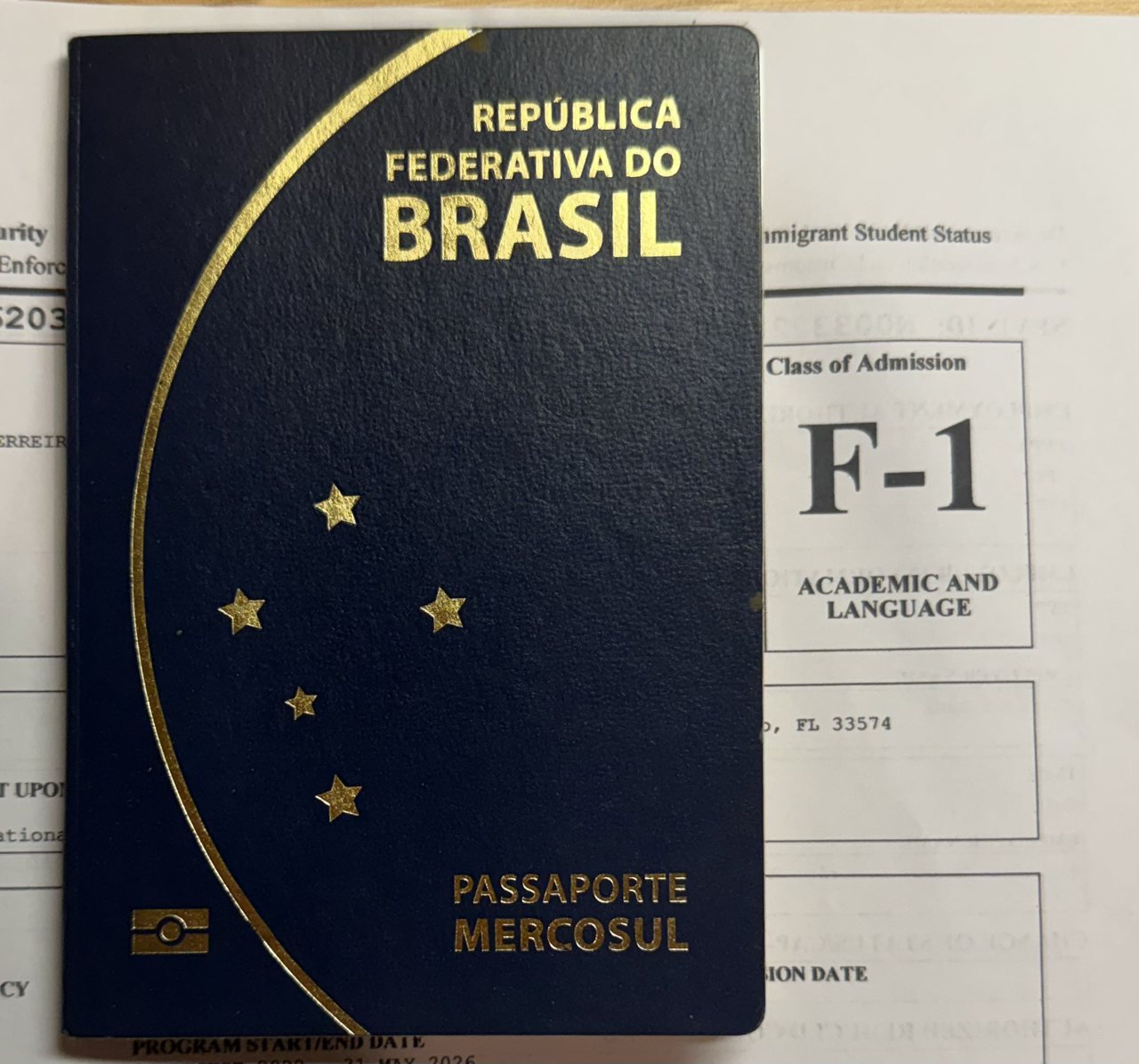
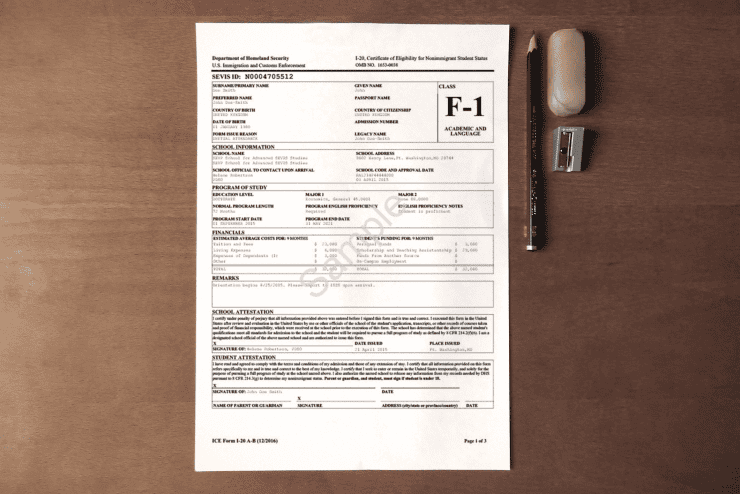
The first option, and the most common one, is Optional Practical Training (OPT), which, according to the USCIS’s website, is a 12-month work authorization program for F-1 visa students to work in the United States in their field of study after graduation.
Important things to have in mind when considering doing an OPT are that a student cannot have completed 12 full months of F-1 Curricular Practical Training (CPT) to be eligible for OPT, the student must be a senior to apply, and that the best time to apply is around 90-120 days before graduation, since it takes a long period for it to be approved. Also, different from CPT, the OPT is not curricular based; therefore, to apply for it, students do not need an internship credit or an official job offer.
It is also important to understand its costs. The primary fee is $410, which is paid to USCIS for the I-765 application, and, since February 15, 2026, Saint Leo University is charging students a $300 Annual Maintenance of Status Fee, totaling the amount of $710.
Paige Ramsey, the executive director for the Center of Global Engagement at Saint Leo, stated, “I think that students on the F1 visa should be aware of all options available to them and consider those possibilities when they are making decisions about their future career or educational path.”
“The regulations as they stand now allow one year of OPT following each degree level (you can only claim the OPT after that degree level, and if not applied for, you cannot go back later to claim it). If you choose to go on for the master’s degree, you can apply for a year of OPT following that degree, but you can’t go back to recoup the one year following your bachelor’s degree even if you didn’t apply for it,” said Ramsey.
Another option international students should consider after completing their undergraduate program is applying for a graduate program, such as a master’s or even a doctoral degree. If that is your preferred choice, it is important to start preparing for it in your junior year since graduate applications should be complete and ready to be submitted by the end of a student’s senior fall to secure good scholarships or GA positions.
The reality is that most institutions start distributing scholarships and conducting GA applications at the beginning of the Spring Semester, so it is always good to be prepared if you want to have as much financial aid as possible.
Beyond that, it is important to remember that to transfer to a new program, an international student must provide proof of financial capacity for at least a full year of studies, which can be provided as a combination of scholarships and financial support from parents or guardians, for instance.
“The student really needs to look at their future goals and see what makes the most sense to them. Does the practical training help in moving up in that position, or is a higher degree required for that? I recommend working with the Career Services office as well to see more information about what the future employers are looking for and if they have recommendations about moving to the next degree or going straight into the work world,” added Mrs. Ramsey.
It is also crucial to remember that the F1-status is a non-immigrant intent type of visa. However, there are ways of legally securing a longer stay in the United States, or even a permanent residence, the green card status, through an employment sponsorship.
When talking about employment immigration opportunities, many students think about the H-1B visa. According to the USCIS, the H-1B visa is an employer-sponsored type of visa that allows an immigrant to stay in the United States for up to three or six years, as part of an employment opportunity.
To qualify, a candidate must have a bachelor’s degree and must be applying for a position that requires a bachelor’s degree or higher as a minimum entry requirement. An international student cannot petition this type of visa by themselves; the U.S. employer must file the petition for a non-immigrant worker with the USCIS, since this is also a non-immigrant intent type of visa. However, according to the University of Maryland, an H-1B can lead to a green card when combined with an EB-1, EB-2, or EB-3 visa.
The H-1B is a great visa because it allows an international individual to keep their legal status in the United States while being able to work full-time, without having to be under a CPT or OPT, since it is a whole new visa, unlike the F1.
Nevertheless, the disadvantage of this visa is that it is a lottery system type of visa with only 85,000 visas available. Meaning that, according to this annual Cap Registration analysis provided by the USCIS, only one quarter of applicants get it, since more than 300,000 people apply most years. Moreover, the lottery only opens once per year, between March 4th and 19th.
Therefore, it is always good to have in mind a more reliable solution, which is the E-B3 visa, which, according to the USCIS, is also an employment-based visa that allows immigrant unskilled and skilled workers to obtain permanent U.S. residency. Similar to the H-1B, it also requires a permanent full-time job offer from a U.S. employer, who will be the petitioner in favor of the immigrant with the USCIS.
This is a highly regulated type of visa since it has immigration intent, meaning that you are directly applying for permanent residency. However, it is not lottery based; any student who finds an employer who meets employment requirements with the Department of Labor can apply. Additionally, it is a longer process that can take up to 4 years, in which applicants must keep their legal status in the United States.
The fact is that living abroad has the power to change someone’s heart profoundly.
One who leaves their homeland to explore a new one for such a long time, such as the undergraduate period, is changed into a citizen of the world, with two places to call “home.”
This makes it harder to say goodbye when the time comes. This is why international students need to know what they can do to legally stay in the United States. after graduation.