

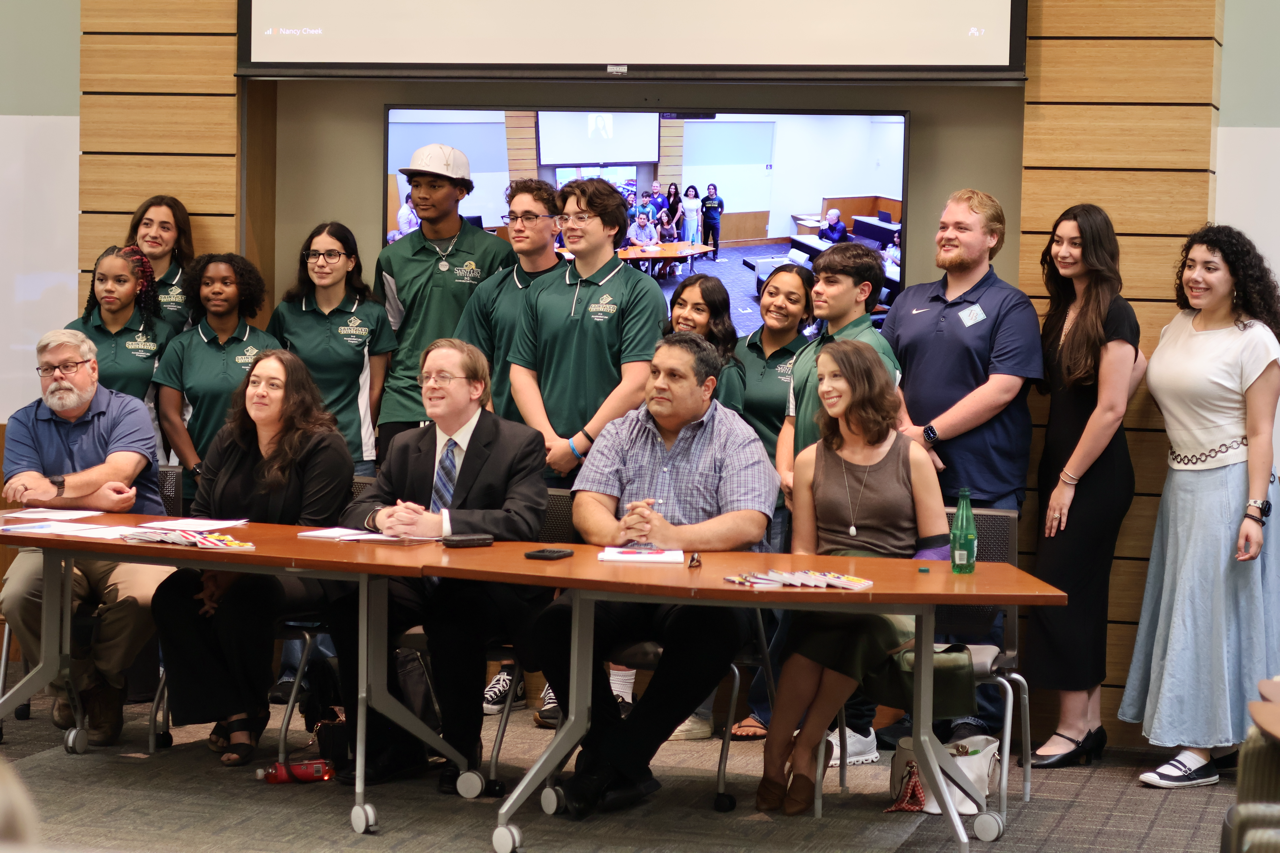
Saint Leo University confronts growing uncertainty over AI during its annual Constitution Day event
By Angeliki Thomas, Staff Writer
“Are you excited or apprehensive for the future?” asked moderator Professor Francis Orlando, a political science instructor and faculty athletic representative. This is the question that people around the world are internalizing as AI technological advances threaten the future.
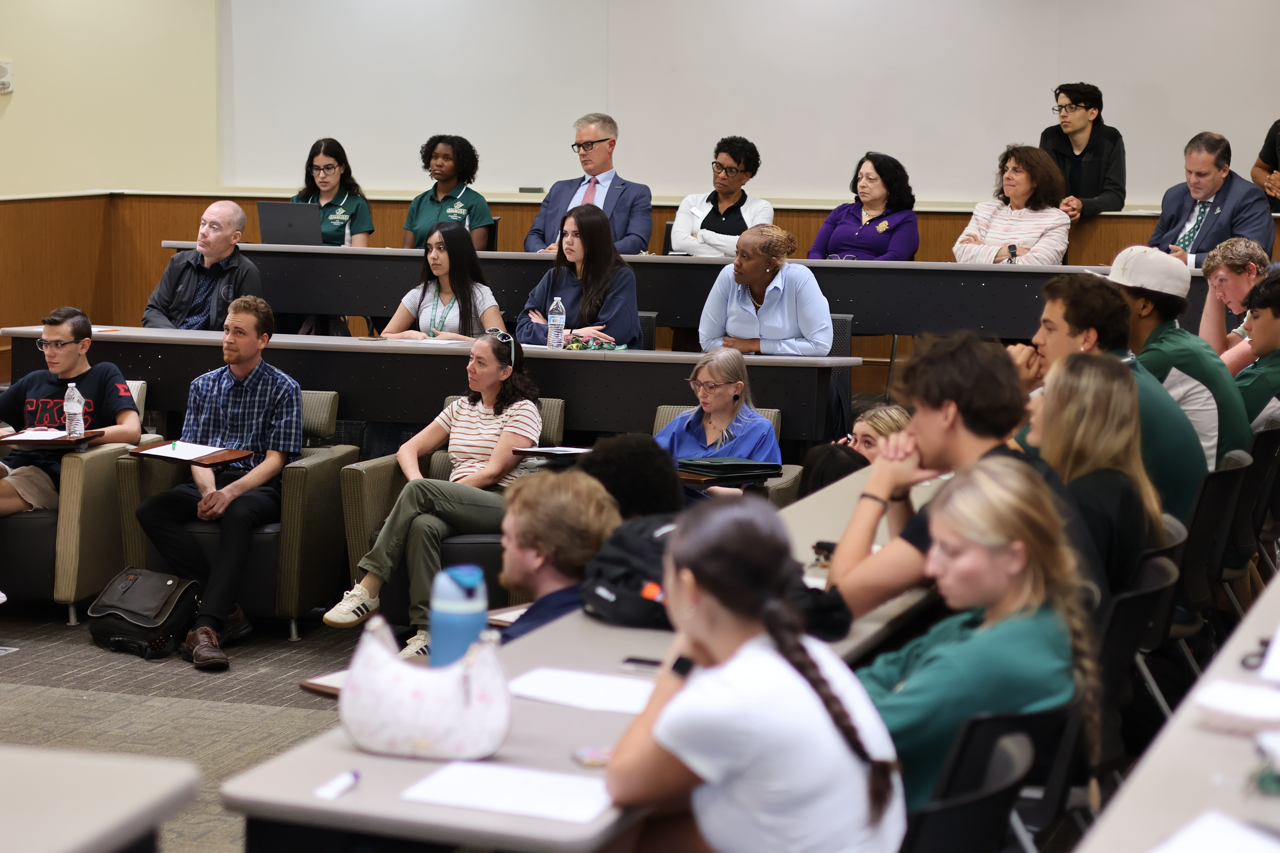
On Sept. 17, Saint Leo University hosted the annual Constitution Day forum, where select guest speakers were chosen to give their professional opinions on current pressing topics. This year, as AI technologies are improving at a rapid pace, Saint Leo chose to bring concerns from the community to the forefront.
After his opening question, Orlando asked the panelists to raise their hands if they were excited for the future of AI and to the shock of many in attendance, only one of the panelists kept her hand down: Dr. Marissa C. Rhodes, an assistant professor of history and a teacher in the medical humanities and honors programs.
Orlando’s next question focused on the core topic of AI and the U.S. Constitution. He began the discussion with Dr. Austin Trantham, an assistant professor of political science and Pre-Law advisor.
Orlando asked, “do you think the increasing power of AI poses any threat to the civil liberties guaranteed to us in the Constitution?”
Trantham acknowledged the complexity of AI’s growing incorporation into everyday life, especially within the context of government surveillance. As a professor of constitutional law, he recognized that there are underlying issues that will surface as AI infringes upon civil liberties through AI adaptation such as in police surveillance cameras.
The discussion quickly led into the viral Anthropic alignment researcher Evan Hubinger’s estimation of a 10% chance of AI ending human life by the end of the decade. This statistic showcased the seriousness of how AI may negatively impact society and the fear that surrounds AI.
Candyce Nelson, a teaching and learning specialist at Saint Leo’s Center for Teaching and Learning Excellence, provided a refreshing remark that led the discussion for the rest of the forum.
“I grew up in the age of the era where the Internet was vastly available, and information was easily accessible,” said Nelson. “I remember my teachers having similar conversations about cheating and cognitive offloading and all of this. But in my view, and from what I see in the arts, AI is a tool.”
Nelson’s perspective focused on how tools can be both helpful and dangerous. Her insightful perspective led to Dr. Kenneth “Kenny” Embry, an associate professor of communication at Saint Leo University in online communication and teaches courses on podcasting and digital literacy, developing the discussion with a personal anecdote that the audience seemed very engaged with. He used an analogy of how AI is like his wife when she reacts to his driving, which makes him a more cautious driver.
Embry shared how, in the allegory of his gratitude for his wife always keeping him driving safely while on the road, AI is taking the wheel and therefore needs some sort of guardrails.
AI is certainly getting behind the wheel, and his very human perspective of AI’s growing involvement put many students at ease.
Dr. Edward Santiago, assistant professor at Tapia College of Business and Technology, contributed a positive perspective of AI, that it will elevate professionals in their fields.
Santiago recognized the fact that AI will replace certain jobs; however, he suggested that, just as in other periods of technological innovation, those jobs will be replaced.
Following the forum, students were left feeling impacted by the discussions that were held. Madelynn Paige Jones, a freshman majoring in political science, shared her thoughts on the event, especially on Candyce’s views on AI being used as a tool.
“There still is the fear of being replaced by AI,” said Jones. “I like to keep in mind that AI can never replace human connection and interaction.”
Jones mentioned how as a student, AI has been helpful in breaking down difficult concepts. However, she continues to diligently focus on her work in developing her own academic and professional skills.
“The best thing we can do now is learn how to properly use this tool that has been given to us.” Jones said, “This is an opportunity. We have to also be able to use this tool ethically and responsibly.”
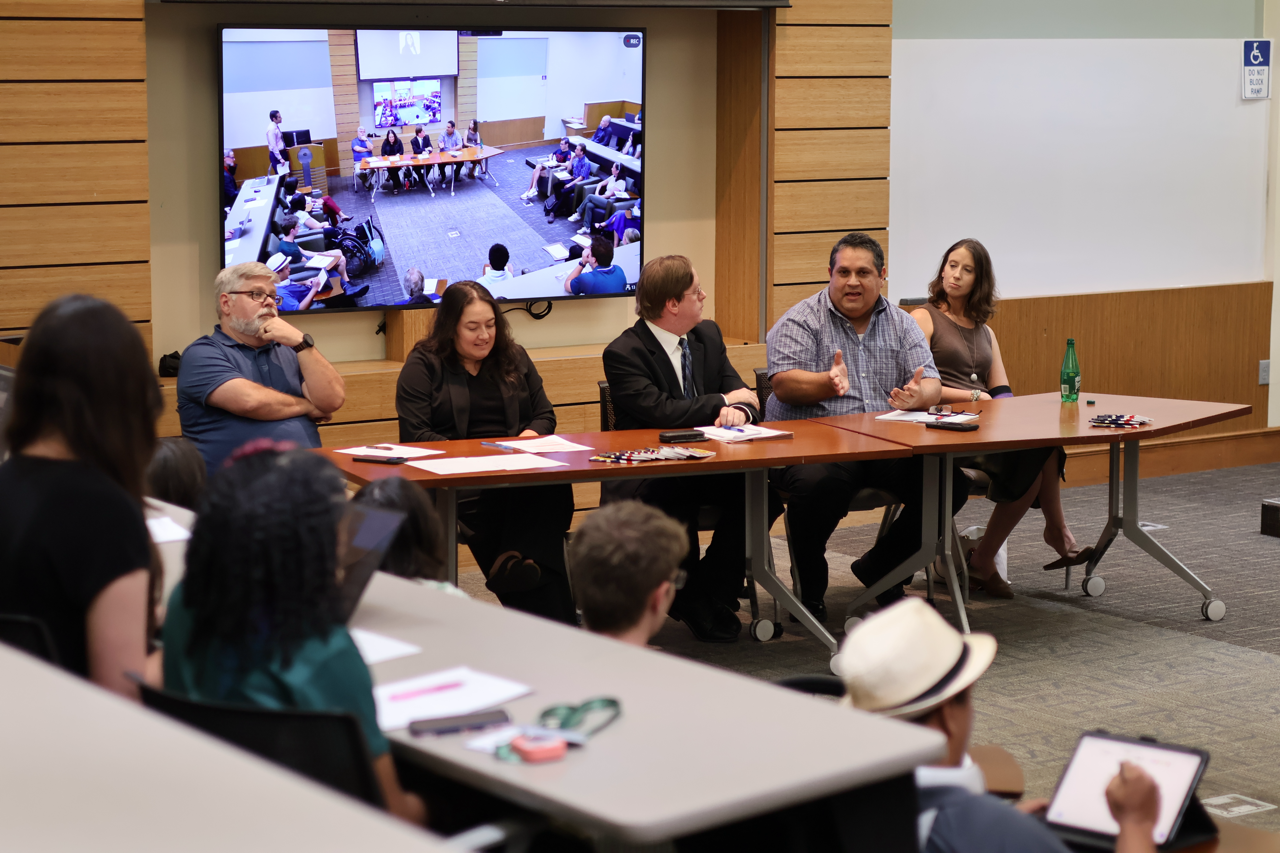
The growing fears of AI usage in the professional and academic world have shaken the community to its core. Orlando shared some thoughts closing thoughts on the forum that circled back to the ideas of whether AI takes over all of the jobs in the workforce and eradicated the need for a workforce, to whether we as a society live in a sort of utopia and what will happen to a society that does not need to work to survive.
“There’s dignity in a day’s work and a fair wage,” said Orlando. “I don’t know if we’re ready for that as a species.”
As AI tools continue to expand at an alarming rate, its impact is being felt across the world. Currently, there is no overarching legislation in place to regulate AI usage and rapid growth.
We are all living in an era of uncertainty and having forums such as these allows students to have a moment to breathe and realize that they are not alone in their journey towards navigating a new technological era that will change the world.