

By Hadassa Ferreira, Arts & Culture Editor
If there is one event that people all across the United States look forward to, it’s the Super Bowl. Not only does it signal the end of the NFL season, but it also boasts one of the most popular artistic events of the year: the Super Bowl halftime show.
This year, following a Grammy win, Bad Bunny took the Super Bowl stage on Feb. 8 as one of the most successful superstars of this era. His performance was a historic moment as it was a huge celebration of Latin heritage.
“I honestly thought Bad Bunny’s halftime show was super fun to watch and just felt different in a good way,” said Trinity Palacious, a junior student majoring in Economics.
The show counted on the participation of dancers who impressed the audience as they moved with joy and great pride. Their impressive performance transmitted determination and willpower, while Bad Bunny conducted the performance as an impressive bandleader. The singer’s stage presence was magnified by Zara’s minimalist white suit that communicated fashion and democracy through an outfit. Zara is a Spanish fast-fashion brand known for its clothes that, beyond being more accessible, still try to transmit class and luxury in its pieces.
But the outfit was not the only message that Bad Bunny transmitted on the night of the Super Bowl. The entire show was an incredible artistic protest. For the first part of the show, the stage represented sugarcane fields, which were once a Puerto Rican cultural exportation crop and source of exploitation.
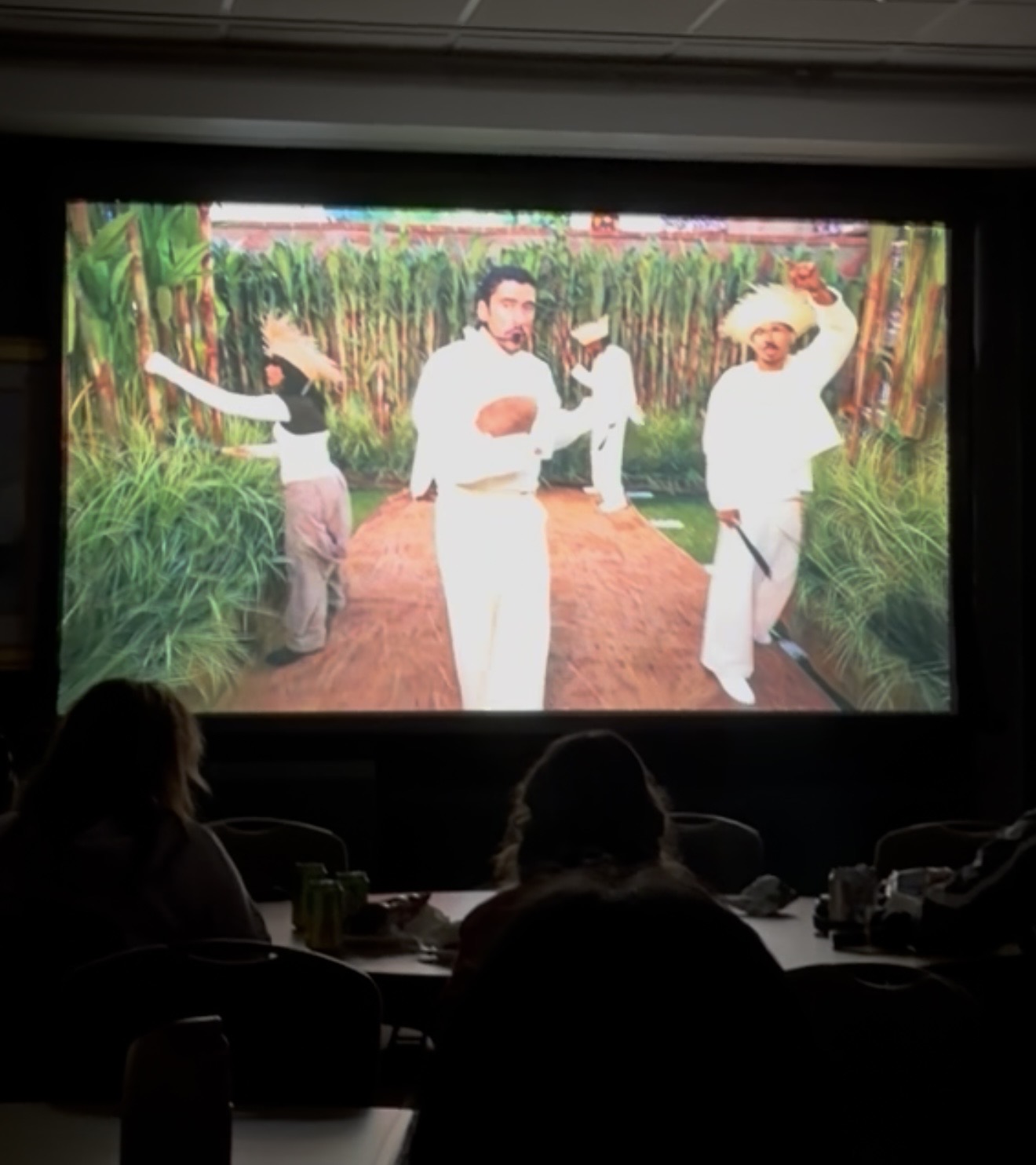
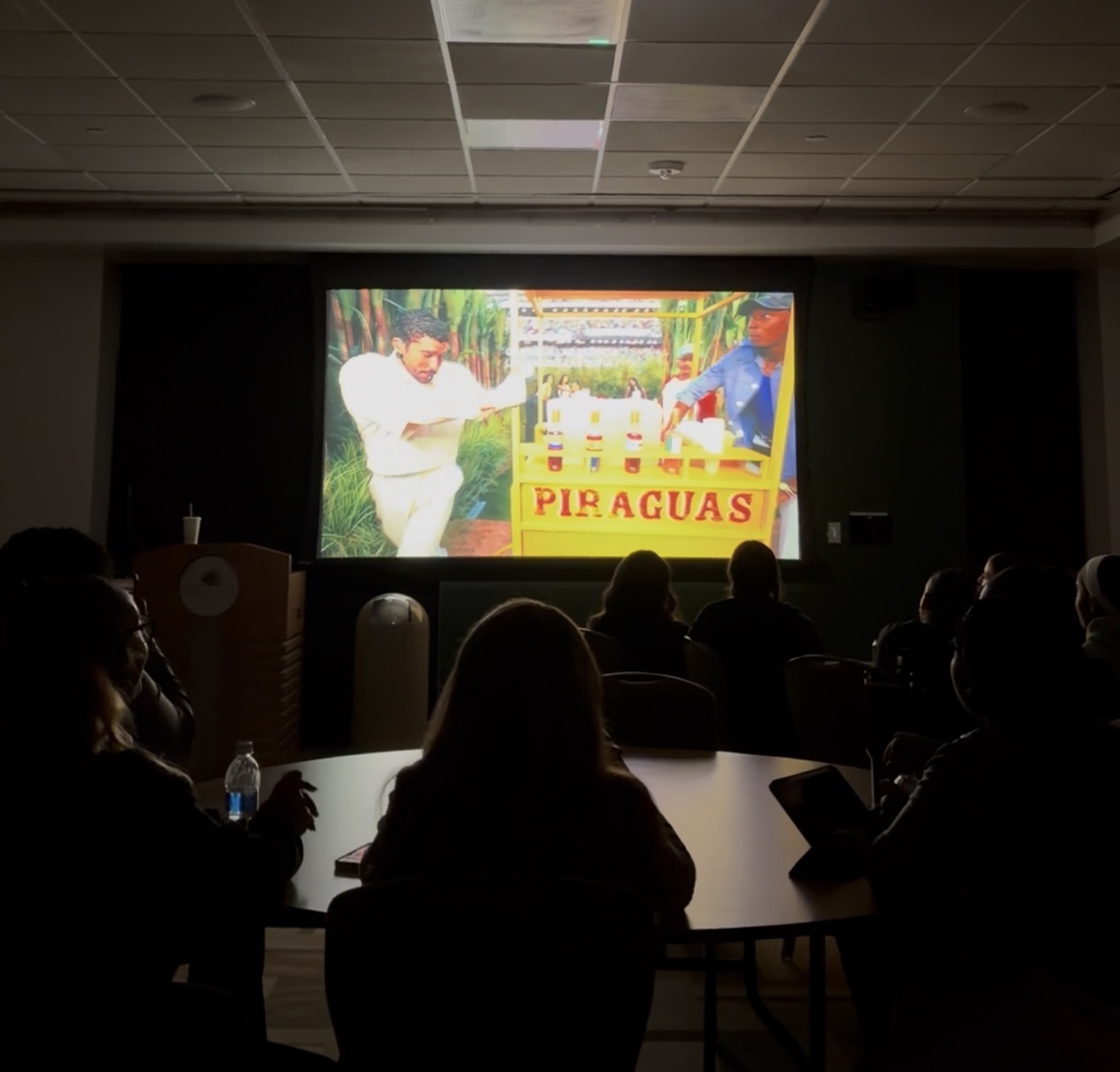
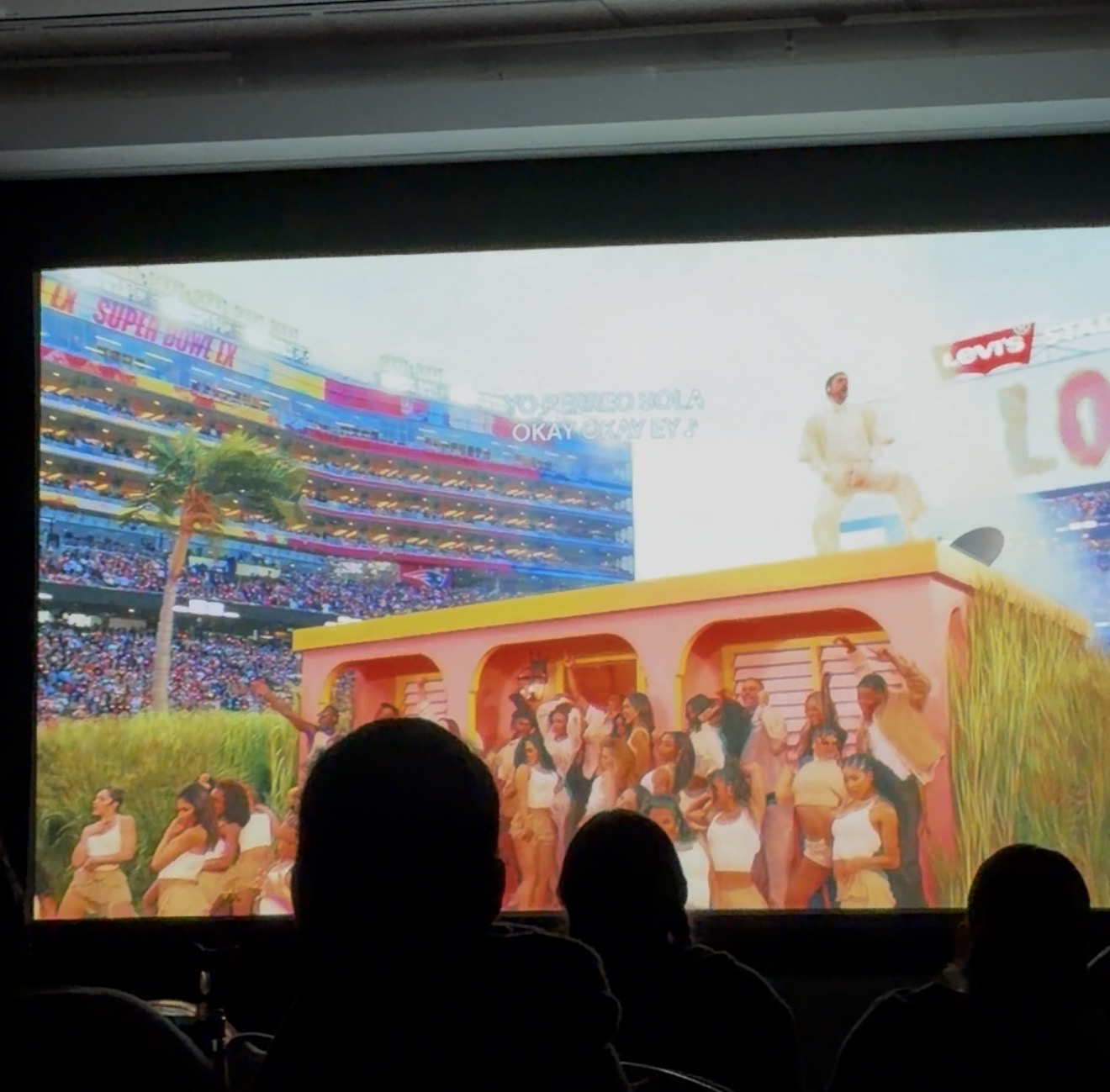
Everything else that followed the introduction was a complement to that idea of showing Latin American culture, which was highlighted by the fact that the show was performed almost entirely in Spanish. There was a clear sociopolitical statement: this was a show made for the Latin Americans.
Every choice of song, such as “El Apagón,” which has a mini-documentary that talks about inequalities in Puerto Rico, also proved to the public that Bad Bunny had a clear purpose: to advocate against social injustice. Bad Bunny’s album “Debí Tirar Más Fotos,” whose songs composed a huge part of the concert, is a clear message about reconnecting with history and heritage, and for that, it is essential to call attention to tragedies as well.
Other elements that drove the audience wild were the presence of other Latin American celebrities, such as Cardi B, Karol G, Pedro Pascal, Jessica Alba, Ronal Acuña Jr., and Young Miko. In addition to those, there was an unexpected appearance of Lady Gaga, who performed a “Puerto Rican” version of “Die with a Smile.”
For some, the mere selection of Bad Bunny to perform at the Super Bowl halftime concert was already a political statement, so much so that Turning Point U.S.A., a nonprofit organization that defends conservative political views and interests, transmitted another halftime concert performed by Kid Rock and various country artists.

Close to the end of the performance, Bad Bunny shouted, “God bless America,” as flags of all the countries that compose South, Central, and North America were paraded across the stage. At the end, all the flags were presented on the stage while Bad Bunny held out a football that had the statement “Together, We Are America” written on it. Behind him, on a huge screen, another statement read: “The only thing more powerful than hate is love.”
With creative, beautiful art, Bad Bunny showed that the best way to fight for political change might not always be through slogans and debates, but that, in fact, freedom and joy are the best tools people have.