

By Togzhan Baikenova, Staff Writer
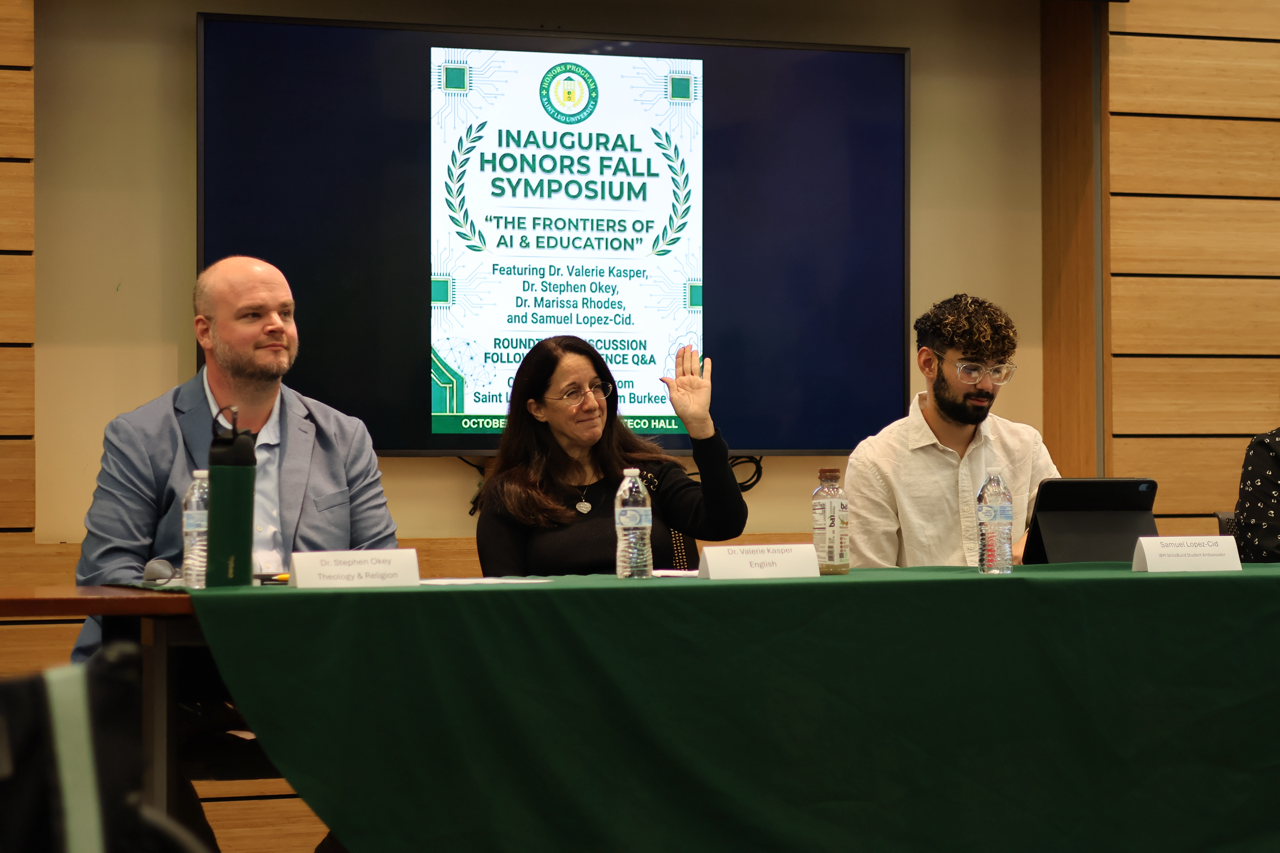
On Oct. 21, Saint Leo University’s Honors Program hosted its inaugural Honors Fall Symposium, titled “The Frontiers of AI & Education,” in TECO Hall of Tapia College of Business and Technology.
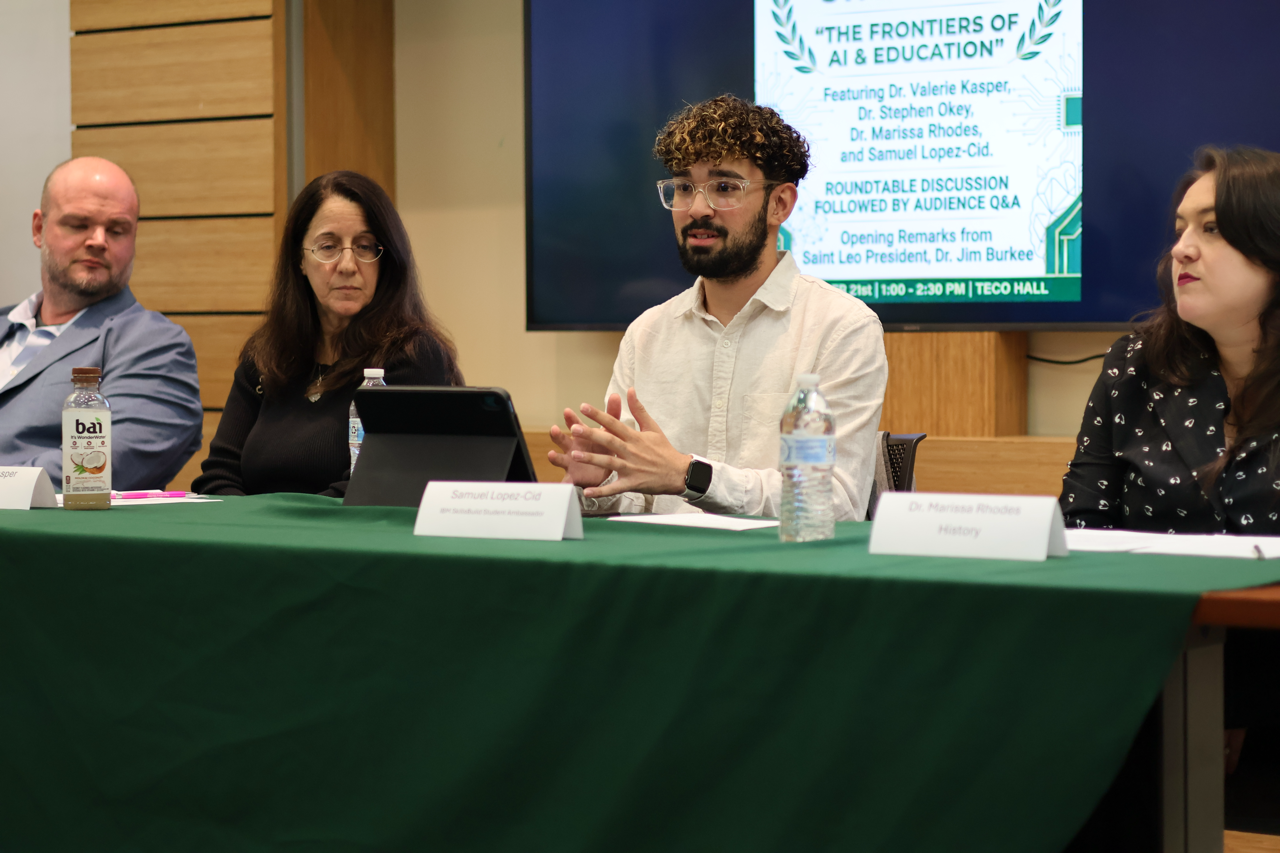
The event featured a roundtable discussion with Dr. Valerie Kasper, Dr. Stephen Okey, Dr. Marissa Rhodes, and Honors student Samuel Lopez-Cid, a sophomore marketing major, followed by questions from the audience.
Kasper, an associate professor of English, shared her experience using technology in academic research.
While working on her dissertation, Kasper used digital tools to analyze historical newspapers. She stated that the technology helped in the successful completion of tasks, but sometimes the results were wrong and her work required human verification.
“Although it will make certain tasks quicker, it will make us better at things; if you lose the human in the room part of it, you are going to have mistakes, errors, and you’re going to lose from that,” Kasper said.
She explained that AI should support students’ work rather than replace their knowledge and judgment.
From the student side of the panel, Lopez-Cid described how his view of AI has evolved. He explained how his experiences changed his views on AI as an IBM SkillsBuild ambassador starting in Spring 2026.
Although he was initially worried about the effects of AI on employment in marketing, he gradually began to recognize the value of understanding the technology and how it could help him prepare for his future career.
However, he warned that students should not let AI do homework assignments without comprehending how it should be used as a tool.
“If you’re going to let AI do it for you, then you’re not learning,” Lopez-Cid said.
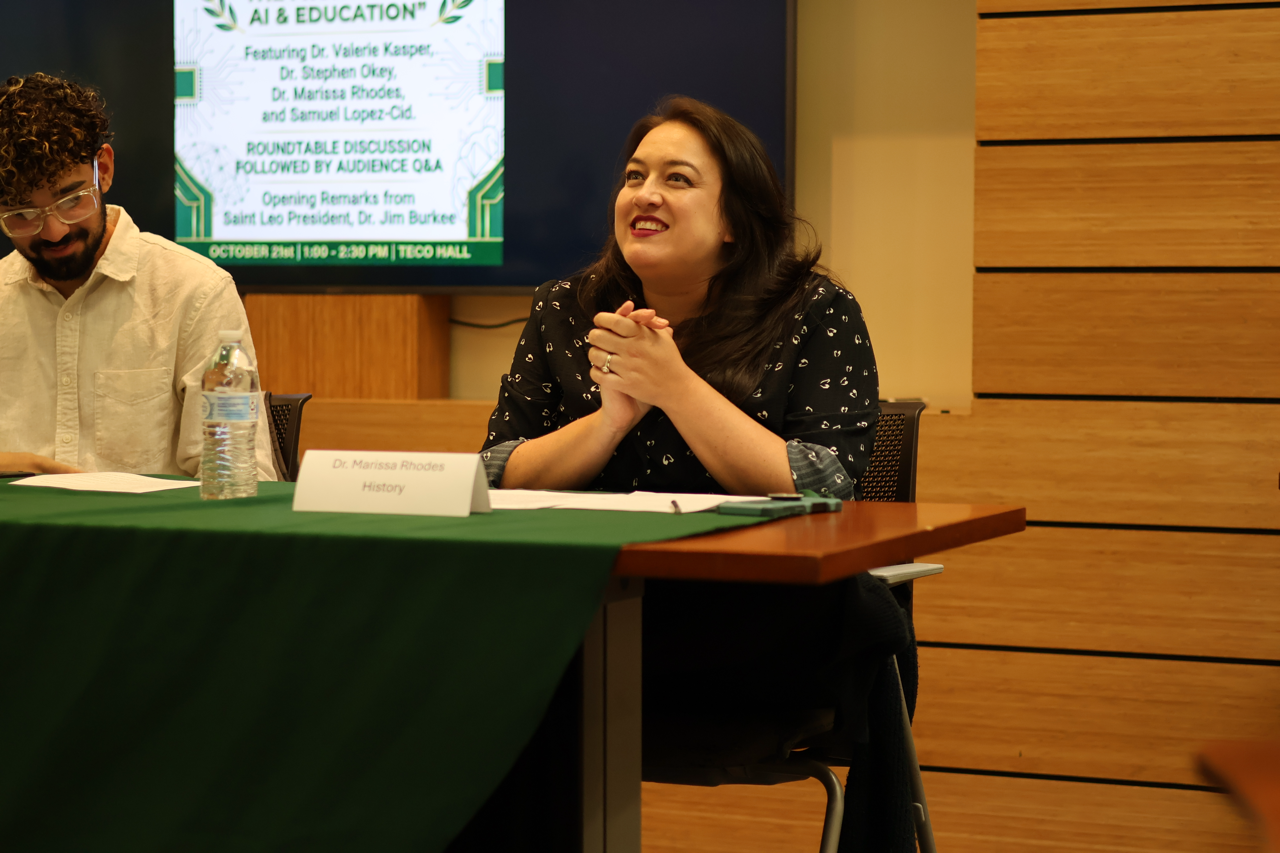
Dr. Marissa Rhodes, an assistant professor of history, discussed how she uses AI in her Honors 260 course to encourage students to explore the technology critically.
In one assignment, students used philosophical arguments to convince an AI chatbot that it was not real. In another, students co-wrote fictional stories with AI, taking turns adding sentences.
Rhodes also described an activity in which students compared their own descriptions of historical images with AI-generated versions. She found that history students generally preferred their own work, while students from other majors were more impressed by AI’s results.
Rhodes explained that she wants students to both study AI and use it, because using it without studying it would simply make them dependent on it.
The topic then moved on to academic integrity when Danny Rodriguez, a freshman majoring in criminal justice, posed a question about how students would be able to use AI technology within the context of personal integrity of the Saint Leo Benedictine value.
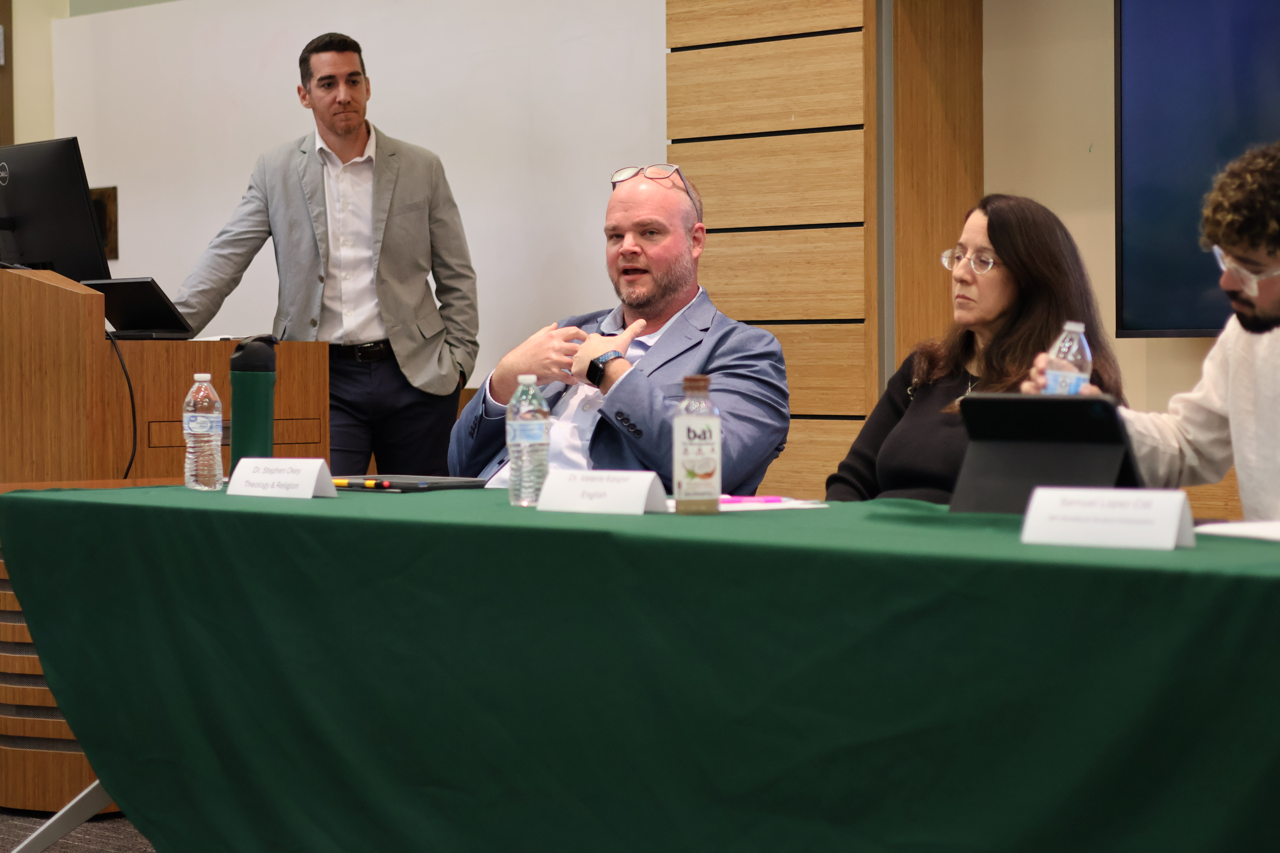
According to Dr. Stephen Okey, a professor of theology, there were some problems with determining the performance of students in their studies using AI because AI would complete tasks without revealing the amount of work involved.
Okey also challenged the credibility of AI detection software.
“But you put them in a bunch of different checkers, you get a bunch of different numbers,” Okey said, referring to AI detection tools used to evaluate student work.
Rhodes added that when she asked students whether they would publish stories co-written with AI under their own names, nearly all said no because they did not feel ownership over the work.
The discussion also raised questions about whether professors need to pay more attention to the process of learning and not just to the assignment itself.
The faculty members agreed that they may require students to submit their interactions with AIto see how they came up with their ideas and assessed the answers received from the AI.
Throughout the symposium, the panelists highlighted that even though AI can assist in learning, it is important that students keep developing their skills.
For Saint Leo students, the event provided an opportunity to consider how artificial intelligence is shaping their education and future careers.