

By Anna Di Domenico, Contributing Writer
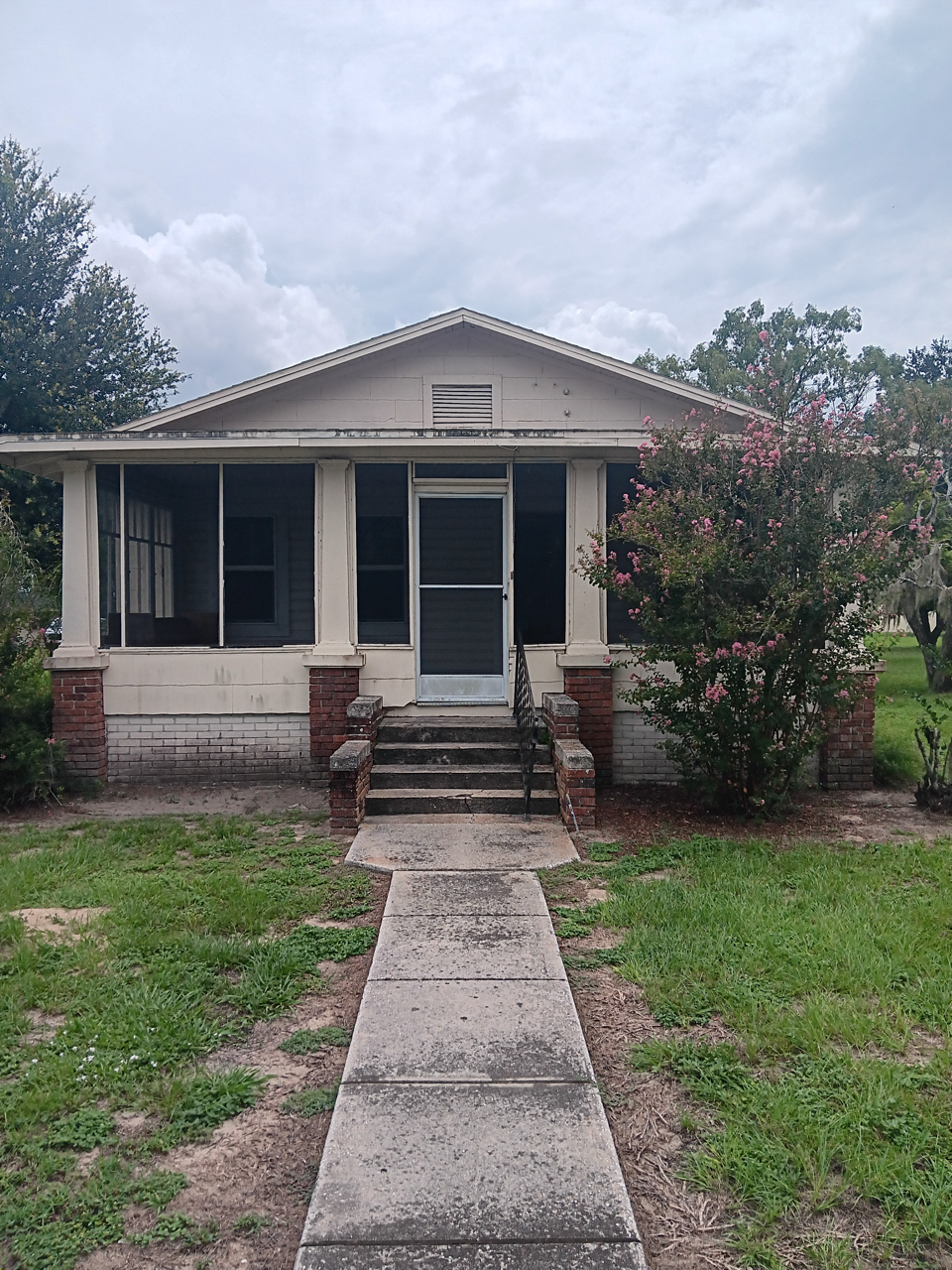
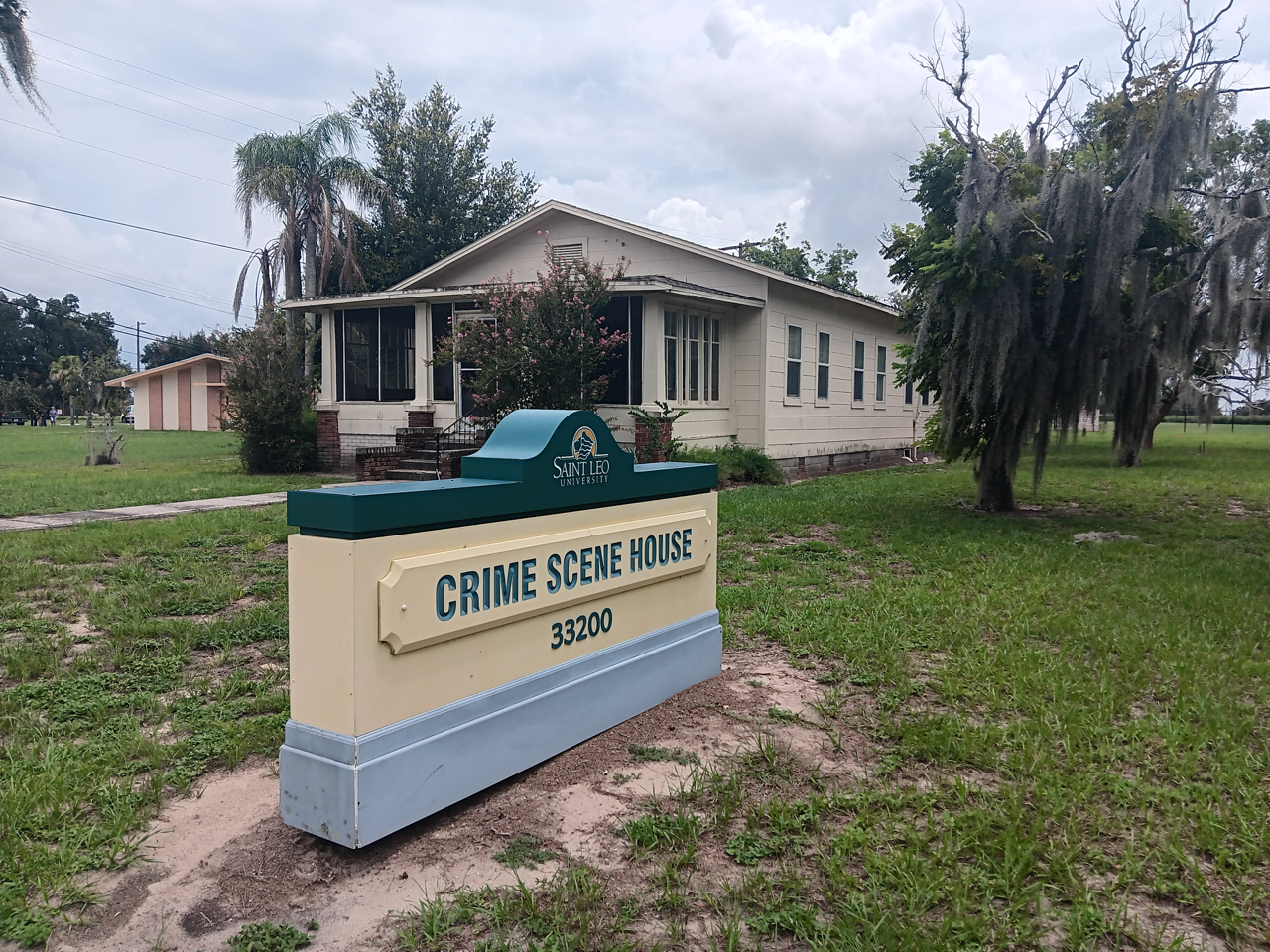
Hidden just across from Saint Leo University’s campus is an ideal house for criminal justice students. In this house, they can literally turn a lecture into a life-size forensic investigation scenario.
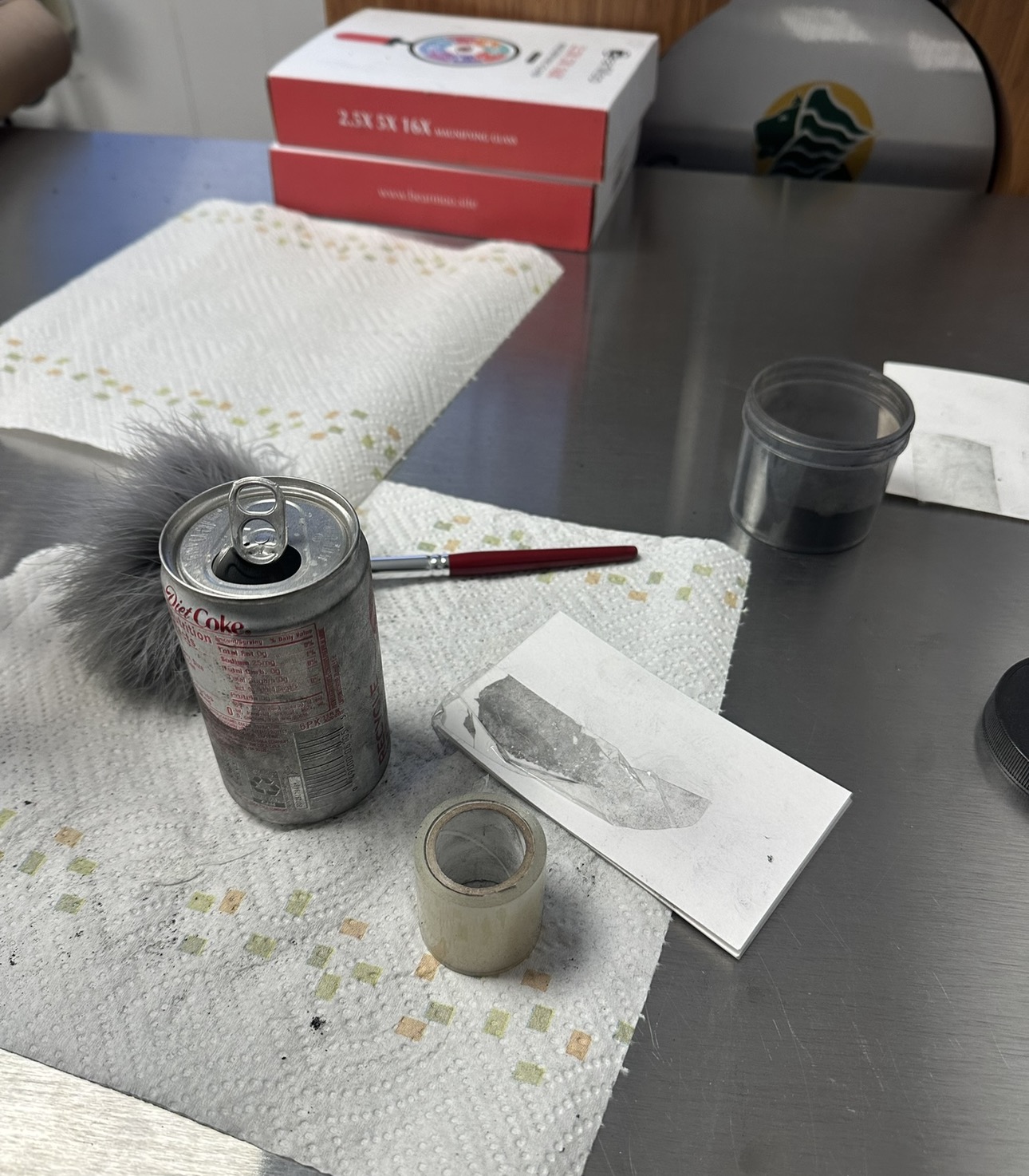
The Crime Scene House is a specialized, multi-room learning laboratory outfitted with controllable environments, outdoor processing grounds, and specialized equipment for evidence recovery. Rather than textbooks alone, students use their classroom learning to examine realistic crime scenes with physical evidence which they can touch and see, such as fingerprint impressions, shoeprints, and blood spatter.
Undergraduate criminal justice majors with a criminalistics focus use this facility most often. It’s managed by Dr. Sarah Mormino and other faculty members who have extensive experience.
Mormino, an associate professor in criminal justice, brings extensive knowledge of criminalistics. Besides her academic background, she contributes a firsthand knowledge of the field that comes from spending seven years as a crime scene investigator, forensic diver, and supervisor. She handled approximately 1,600 crime scenes, from burglaries to homicides, before coming to the university. In her eyes, a key reason she came to Saint Leo was because the university provided a special location for field skills instruction.
“Saint Leo’s practical, hands-on program is something I fell in love with while completing my Master’s, and I knew it was something special to be a part of,” Mormino said.
Mormino designs many of her courses to be an even split between lecture and hands-on learning, ensuring students receive visual, auditory, kinesthetic, and logical instruction.
“There are two primary forms of learning: memorization and application,” Mormino explained. “To truly learn the methodology used in crime scene investigation, students need to be able to apply the skills they have learned in a real-world scenario. This requires a skill I call investigative thinking, which is vital within the field”.
To give students those opportunities to apply their classroom knowledge, Mormino carefully designs and stages crime scenes throughout the house.
Setting up the house is a time-consuming, but very rewarding undertaking. Mormino often creates multiple scenes simultaneously to ensure all students have equal access to the space, tailoring the evidence to whatever specific skill is being reviewed that week.
“It allows me to be creative and bring in aspects I have experienced at real crime scenes,” Mormino said.
For students, training inside the house completely transforms their understanding of evidence collection and processing.
Jennifer Sanchez-Martinez, a junior criminal justice major, noted that the hands-on environment gives a view no classroom can really match, at least not in the same way.
“Does practicing in the Crime Scene House make me feel like a better investigator than just learning in the classroom? I say absolutely,” Sanchez-Martinez said. “It helps me better understand what even a fraction of the experiences they go through is like.”
One key advantage of the facility is its outdoor area, which exposes students to Florida’s unpredictable climate, a major factor in evidence degradation during real investigations. Sanchez-Martinez recalled learning how to process nonporous surfaces using cyanoacrylate (superglue) fuming and adapting techniques to changing weather conditions on the fly.
For Zoi Ward, a junior criminal justice major, said her first experience inside the Crime Scene House exceeded her expectations. While the realistic environment was initially overwhelming, it quickly became one of the most valuable learning spaces in the program.
“I was definitely extremely excited for all the possibilities of what I could learn,” Ward said. “It is the perfect mix of the classroom environment and the real world at the same time.”
Ward emphasized that practicing techniques like trajectory analysis and latent print lifting inside a physical house builds the precision required in modern forensic work.
By providing a controlled yet realistic environment where students can make mistakes, adapt to changing conditions, and refine their technical skills, Saint Leo’s Crime Scene House helps bridge the gap between classroom instruction and professional practice.
Mormino believes the Crime Scene House will continue to evolve alongside the profession it was built to support.
“Forensics is a continuously evolving field,” Mormino said. “As the field changes, the Crime Scene House will change … You never know what is next!”