
By Sanjea Taylor, World News Editor
Since February, there has been a shift in water conditions across Tampa Bay. This has led to various restrictions and growing concern in the community. Now, many are wondering what these restrictions will look like going forward, and what happens next?
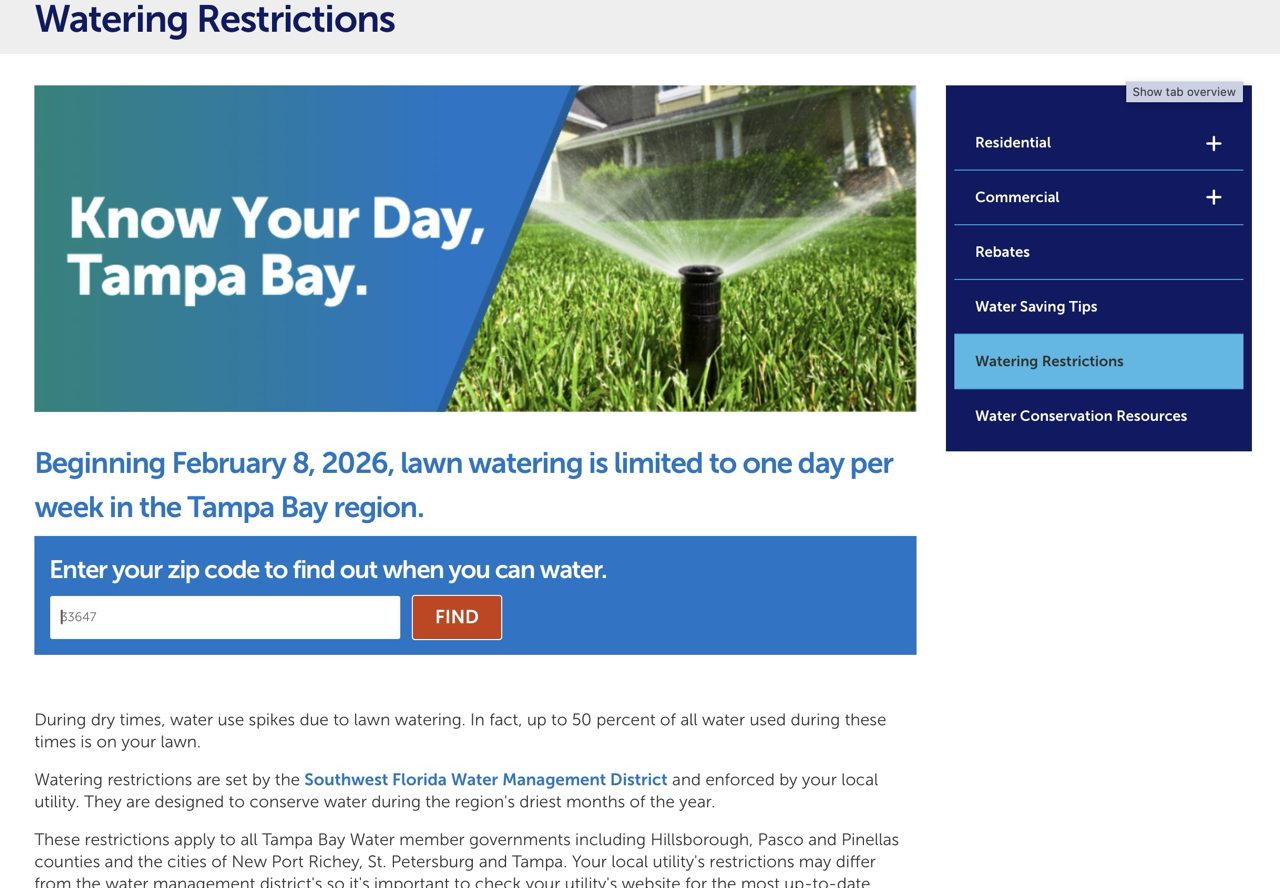
On Jan. 27, The Southwest Florida Water Management District (SWFWMD) announced a severe Phase II water shortage that takes effect from Feb. 8 through July 1. According to FOX 13, this has resulted in mandatory one-day-a-week outdoor watering restrictions that are in place to help reduce water use during the shortage.
Restrictions like these are not new to citizens as they have been in place since Dec. 2023 and made permanent in Aug. 2024 by local governments. However, they are being more strictly enforced during this current shortage.
According to 10 Tampa Bay, areas that these current restrictions apply to are Hillsborough County, Manatee County, Pasco County and surrounding areas. Along with specific watering days, watering is also limited to certain times depending on property sizes.
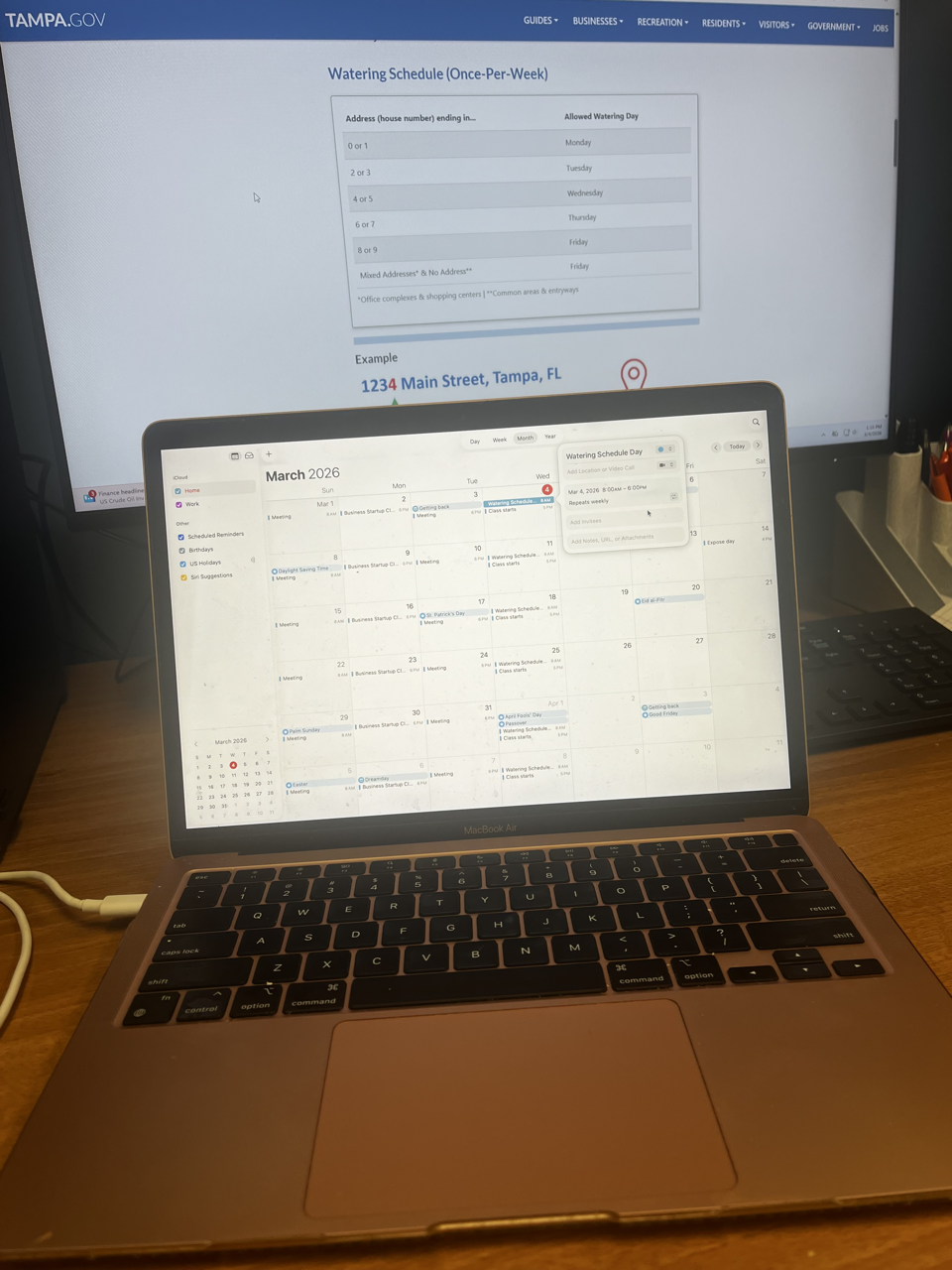
10 Tampa Bay also added that restriction days, spanning from Monday to Friday, were also based on house numbers. Properties under two acres can water before 8 a.m. or after 6 p.m., while larger properties can water before 10 a.m. or after 4 p.m., unless stricter local rules apply.
According to Tampa.gov, outdoor watering was the focus when it came to these restrictions because it makes up over 50 percent of water use and through the conservation efforts, Tampa was able to save roughly 4 billion gallons of water.
However, many people in the community still have questions as to why these restrictions are happening, and what comes next as they stay in place. Dr. Christopher Miller, professor of biology and ecology at Saint Leo University, shared more about the water shortage and how itcan affect the community.
“The primary and most immediate cause of the water shortage is due to recent weather patterns. We had a very hot summer with relatively low rain, when we normally get more rainfall,” saidMiller.
“This has been followed by a relatively dry winter with cold air being in place for an unusually long period of time. In the bigger picture, it’s possible that climate change has disrupted the system,” stated Miller.
Also, these water shortages can lead to serious impacts on the community that many people may not fully realize or even ignore.
“The water shortage can have several impacts on both the natural ecosystem and human-built systems that rely on our sources of water,” said Miller. “The water shortage can mean we don’t have sufficient water in the short-term, which will lead to prioritizing water use.”
“There probably will be shortages of water in certain areas that are exclusively dependent on aquifer water that comes from wells. So, the combination of drought and recent freezes have meant farmers had to use lots of water to protect their crops from the cold by pumping more water out of the aquifer,” added Miller.
Some residents are confused about the water deficit after two major hurricanes, which Fox 13 reported, brought nearly 11 inches of rainfall less than two years prior.
“Water storage is relatively temporary, and, wetlands, rivers, … do not necessarily hold on to that water for long periods of time before the water either evaporates or is moved somewhere,” said Miller.
The hot weather that affected last year resulted in many of these water sources like rivers, drying up very quickly, making the main water source aquifers. This makes aquifer even more important, along with the fact that it provides most of the water used for everyday needs.
“The majority of our municipal water used for drinking and everyday use comes from the aquifer. A smaller percentage in this region comes from surface water or the Tampa Bay desalination plant, but the vast majority is pumped out of the ground and moved to residences and businesses,” said Miller.
Miller stated that irresponsible water usage shows a lack of care and stewardship. Also, failure to follow restrictions can result in serious consequences. According to Tampa.gov, violating these restrictions may result in fines ranging from $100 to $500.
Whether someone is a student on Saint Leo’s campus or living in the Tampa area, there’s a lot you can do to help conserve water.
“There should be a prioritizing of water use: Obviously drinking, cooking, and consumption are more important than washing the car or watering the grass,” stated Miller.
“Follow recommendations and rules put forth by the science and policy makers at SWFWMD or municipalities. These are based on well-established best practices and if we don’t do them, we will wonder why there isn’t enough water for more important things,” added Miller.