
By Sanjea Taylor, World News Editor
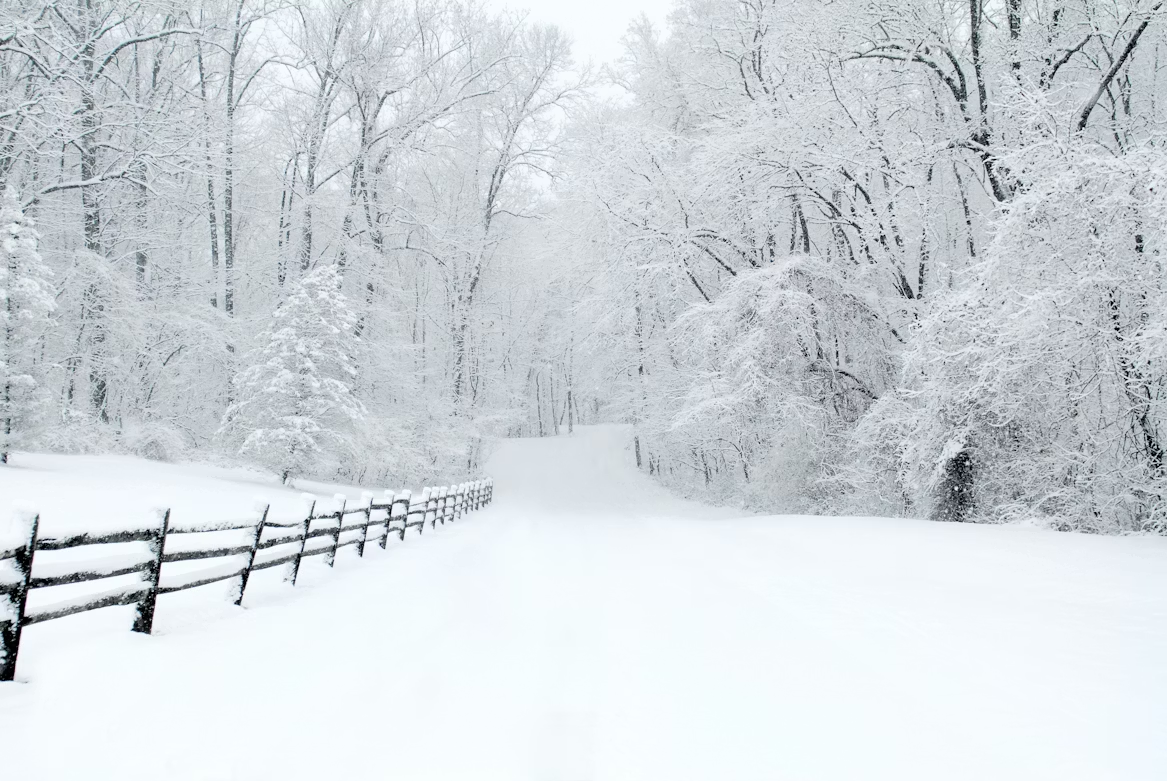
Just one month into 2026, the year has already made a frosty entrance as a big snowstorm has hit many parts of the United States. Now, even southern states feel the winter cold, with many citizens in sunny Florida asking, “How is it so cold when there’s so much sun?”
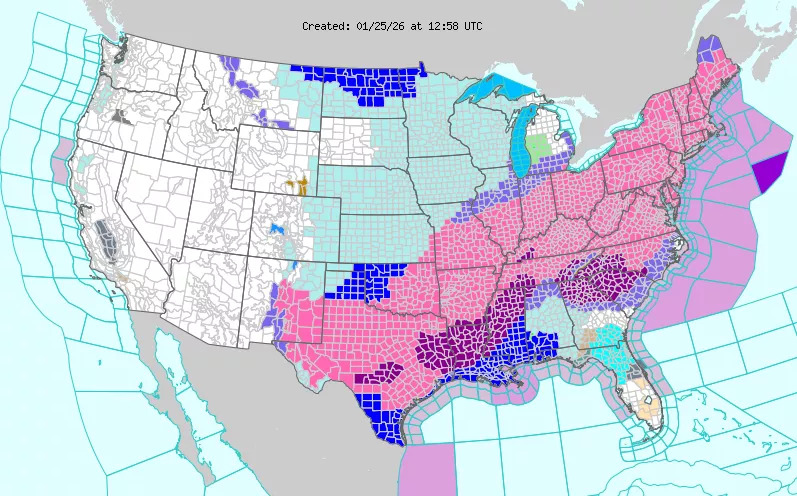
From approximately Jan. 22 to Feb. 1, there has been a winter-storm watch as winter storms have brought heavy snowfall and freezing temperatures across much of the country, knocking out power for hundreds of citizens.
The first reports of the winter storm stated it had affected the northeastern region of the country,spreading snow through the United States and Canada. According to CBS News, this system was forecasted to be slow moving, giving the snow and ice a long enough period to build up and increase.
Following the storm, another powerful system known as Winter Storm Gianna developed, bringing even more snow and colder temperatures to southeastern regions. According to CNN, the storm caused many flight delays, cancellations, and was even linked to multiple deaths.
Winter Storm Gianna was pronounced a “bomb cyclone,” with many states seeing temperatures 24 degrees and lower. Florida was affected by both winter storms; however, Winter Storm Gianna affected the state deeply, and despite Florida’s familiarity with cold fronts, this one feltdifferent.
Now many are wondering what a bomb cyclone is, and why is it affecting Florida so much? Dr. Harsha Perera, an assistant professor in physics at Saint Leo University, shared some more insight into what is really happening.
“Well, this is not usual for us as Floridians. In general, this is actually one of the most dangerous winter storms out there,” said Perera. “We are far down south, and closer to the tropics, so we usually see warmer winters.”
With the use of familiar weather terms, Perera explained that a “bomb cyclone” can be thought of as a winter hurricane. However, instead of heavy rain, this type of hurricane brings blasting cold air into regions that normally don’t experience extreme winter weather like Florida.
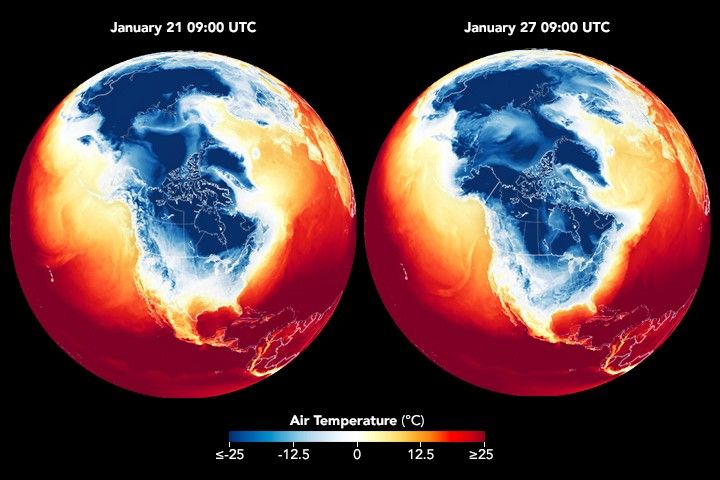
“In the North Pole there is a ‘polar vortex.’ They’re like jet streams; they’re just circling around, keeping all the cold air near the North Pole; they’re not leaving the North Pole. Naturally, it is there,” said Perera.
“During the winter times, especially during this season, that polar vortex gets weakened. As a result, some of that cold air is actually escaping from it and coming our way,” stated Perera.
Perera explained that, based on Florida’s location, it gets warmer air and in the warmer regions, Florida has very thin air layers, but in the North where it’s very cold, the air mass is very dense.
As a result of these layers, and the pressure difference being way too high, the winds are coming from the dense areas to the warmer areas. There are multiple factors that may cause the polar vertex to weaken, but a main factor is climate change through global warming, which has caused many extreme weather events.
“That polar vortex is the one that is protecting us from getting extreme cold air, and because of global warming, the climate is changing, so that polar vortex is also getting warmer,” statedPerera.
“The cold air, still in the North Pole, can escape as far as Florida or all the other southern states,” said Perera, “So, there is a strong correlation between the two, the global warming and theseextreme weathers.”
Understanding weather patterns like these can allow many to see how dangerous they can be. In fact, The Weather Channel reported that winter storm Gianna impacted 100 locations in North Carolina, eastern Tennessee, and other states, leaving them with at least a foot of snow.
“The dangers for us that we usually don’t see is the freezing of plumbing, and infrastructure damages,” said Perera. “Also, you have to stay warm all the time, we need to put on layers, not just one, multiple layers, to escape from this extreme cold air.”
“At the same time, you have to protect your agriculture, because all the crops that we have. They are not immune to the cold weather, and that can also result in spring flooding,” stated Perera, explaining that spring flooding might be a side effect of this cold weather in the future.
With understanding the storm and the types of damage it can cause, people should remain aware that similar events might occur, or the storm might continue. Due to this, it may be helpful to have conversations on how to prepare properly for the future.
“Keep the plumbing running so that those pipelines don’t get frozen; sometimes it can burst, and that will be a disaster if that happens,” stated Perera. “And, of course, you have to put on layers to make sure you’re not getting hypothermia.”
“If you’re driving in early hours, especially when the temperatures are still under freezing, you may see some icy roads that you want to avoid, and you have to be very cautious when you drive on the ice because it’s it can get slippery and you can get out of control,” continued Perera.
Despite the freezing temperatures, understanding what is happening with these unusual winterpatterns can help communities stay informed and better prepared for the future. Even though events like these are rare, increased awareness and early preparation can reduce risks.