

By Sayuri Vargas-Hernandez, Staff Writer
With the 2025 graduation period right around the corner, students are getting concerned about the job market that has been more uncertain than it has been in years.
Based on research from Investopedia, U.S. unemployment rate has surged to 4.3 percent, the highest level since 2021, raising concerns about the labor market, which is affecting new college graduates. According to recent labor data from the Bureau of Labor Statistics, only 22,000 jobs were added in August 2025, well below the 75,000 economists had forecasted, marking the fourth consecutive month of slow hiring.
The slowdown stems from higher interest rates, increased business expenditures, and mounting global economic pressures. Employers across multiple sectors are pulling back from hiring, with some industries, particularly technology and finance, implementing layoffs and freezing new positions.
Retail and hospitality, which often serve as entry points for younger workers, are also scaling back, offering fewer hours and limited advancement opportunities. Another growing factor is artificial intelligence (AI) as companies adopt AI tools to improve efficiency and avoid paying employees, since AI is able to do certain jobs.
“With the rise of artificial intelligence, AI can make job tasks easier. This can be automating calendars, programming, manufacturing, packaging, etc.,” said Elijah Kennedy, a sophomore majoring in Business Management at Saint Leo.
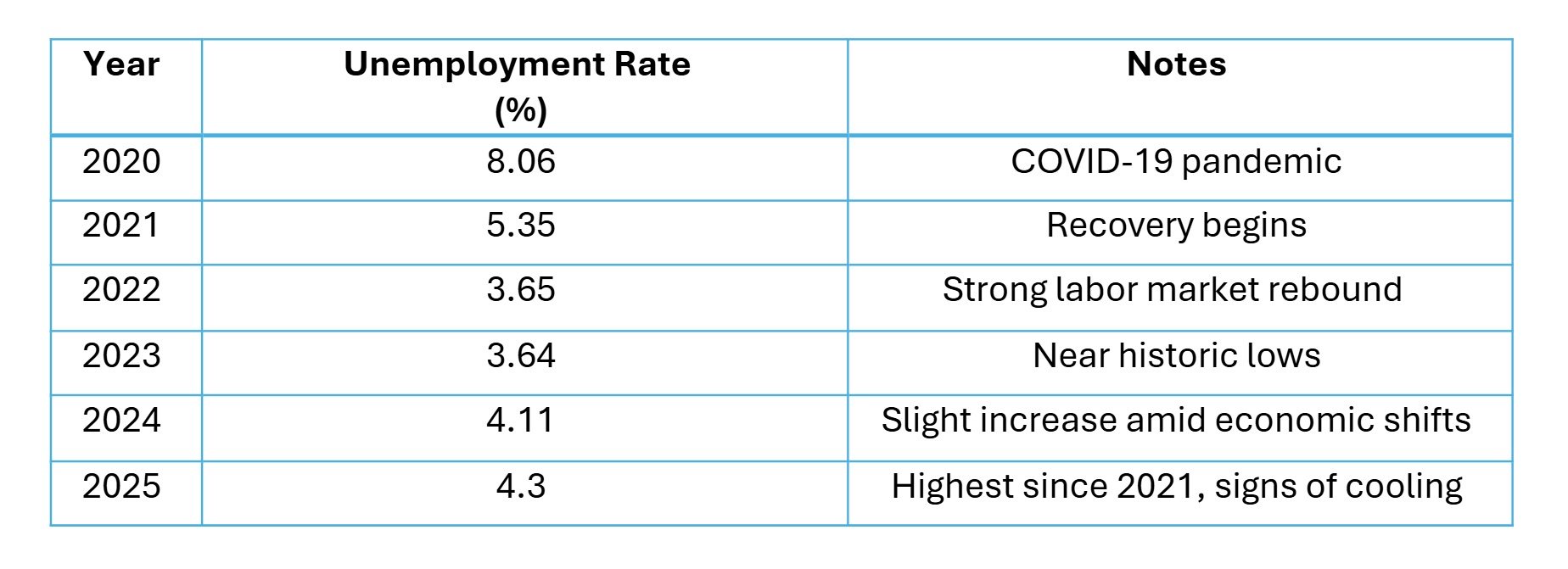

From virtual assistants, regulatory AI-driven platforms managing marketing and logistics, automation is quietly eliminating thousands of positions across industries. While AI offers efficiency and creation, it also raises questions about workforce readiness and the future of human centered roles.
For students graduating this semester, the timing presents big challenges like the rise in unemployment which means increased competition for every open role, as entry-level candidates must now contend with experienced professionals re-entering the workforce.
This dynamic makes it harder for new graduates to secure full-time positions, especially in fields that have been hit hardest by economic shifts.
“I am getting my master’s at Saint Leo University because I knew I had to. I started working as a GA, but a degree is worth less now than it was 25 years ago, and salaries are getting worse,” said Andres Felipe Cubillos, an MBA project management major and a graduate assistant for the residence life department at Saint Leo.
“A couple of my friends have a part-time or second job that is not related to their degree. It’s scary because the market is so poor,” stated Cubillos.
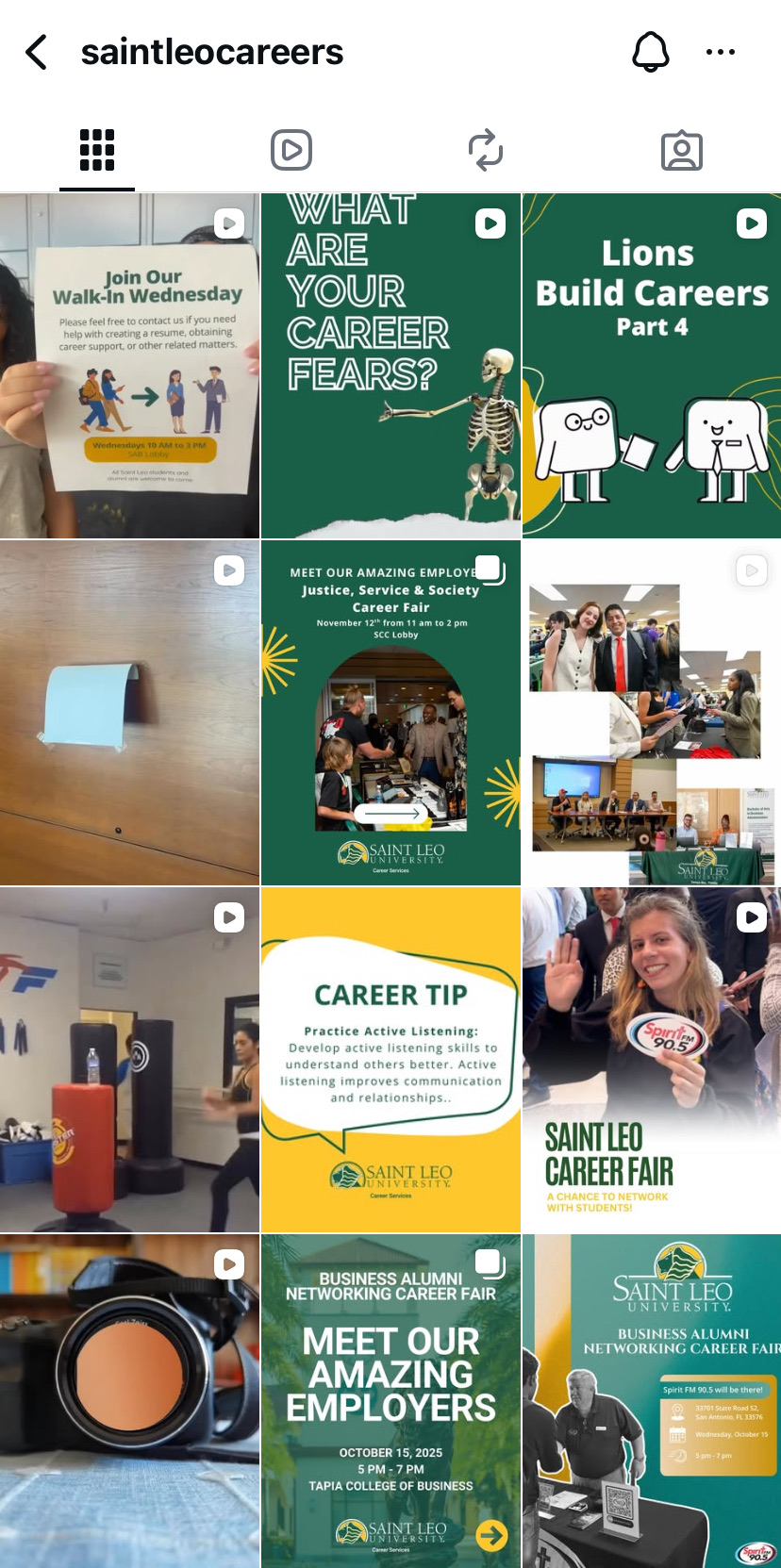
Career Services and advisors help students look for strategies. Rather than focusing only on traditional full-time roles, graduates are being encouraged to explore internships, attend every career fair that Saint Leo brings to the students, and take any small opportunities.

Online certifications and short courses are also recommended as a way to stand out among competitive applicants.
Since the economy continues to adjust, one thing is clear: the class of 2025 is entering a workforce in transition. Navigating it will require not only talent and determination but also being authentic and different from the rest.