

By Elijah Penn, Staff Writer
Saint Leo is in one of the biggest regions affected by human trafficking in the nation.
Florida ranks the third most state in human trafficking reports—after California and Texas—with Tampa Bay being the third biggest area for human trafficking in the state.
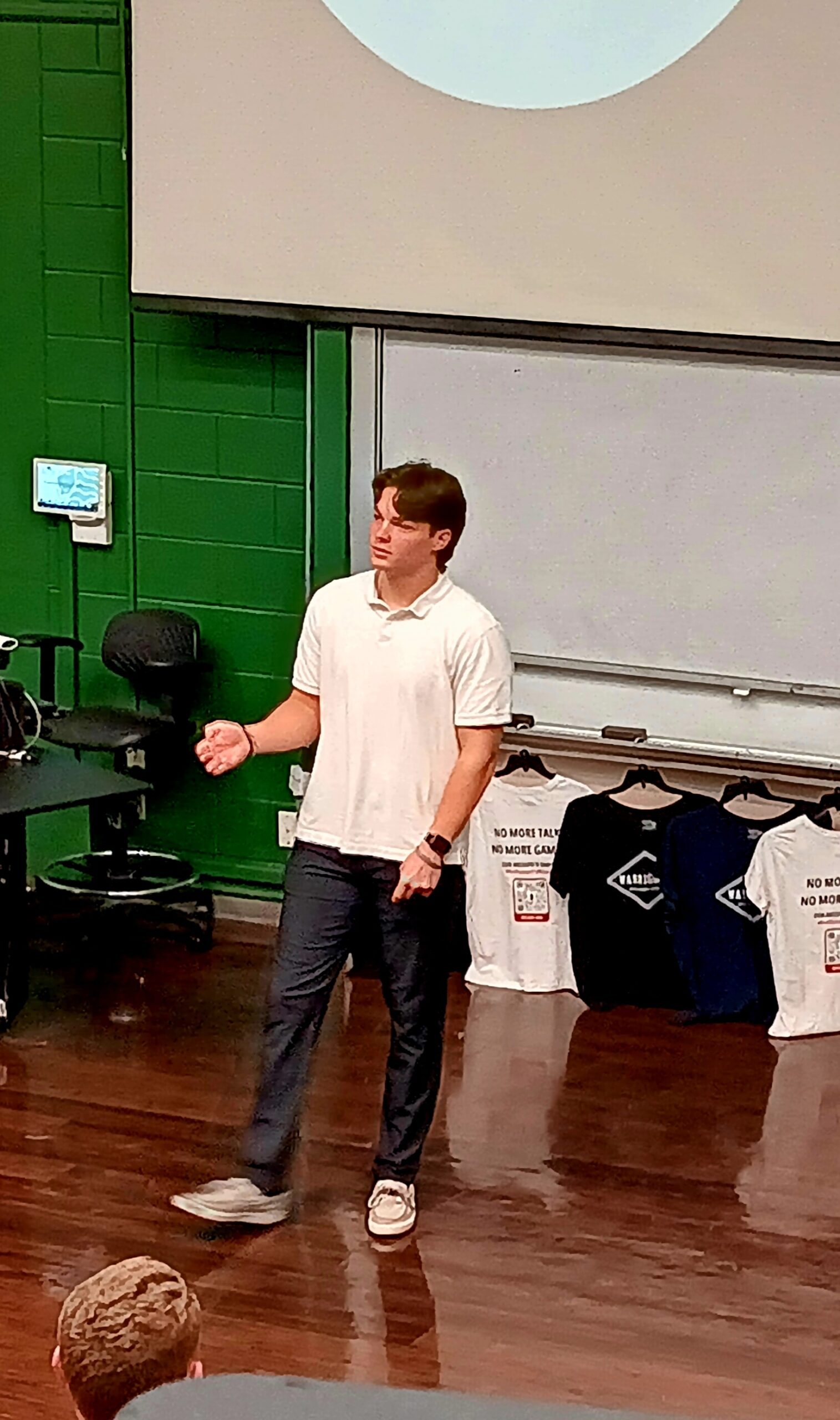
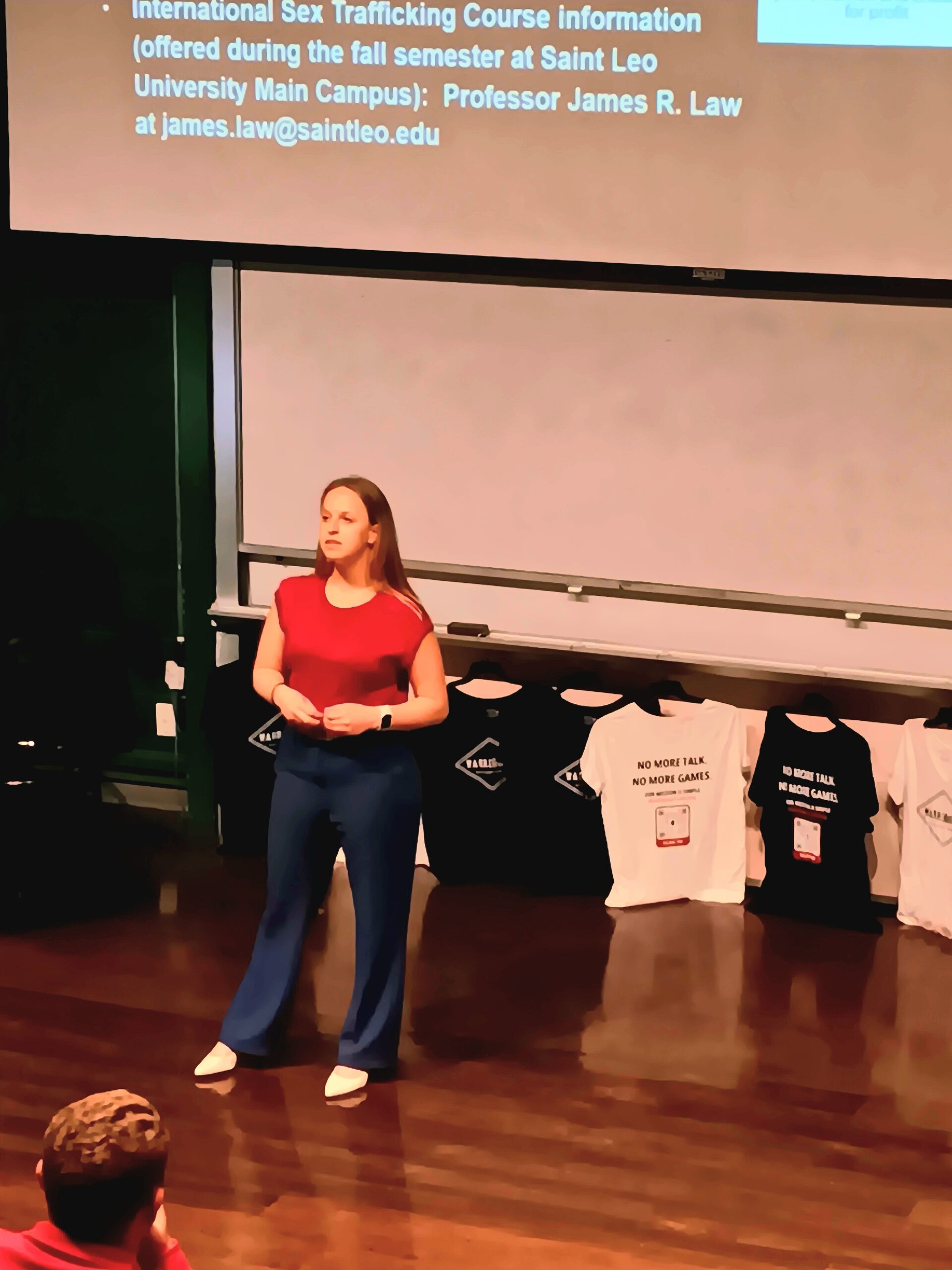
On Oct. 13, the Saint Leo University chapter of Turning Point USA hosted an informational presentation on the tragic realities of human trafficking, but also the glimmer of hope for those trapped in the vicious cycle.
The event featured Retired Corporal Alan Wilkett, who worked for over 25 years with the Pasco County Sheriff’s Office, Saint Leo Adjunct Professor James Law, and Alyssa Johler, a Saint Leo graduate and current intern with Wilkett’s organization, Warrior 321, which combats human trafficking.
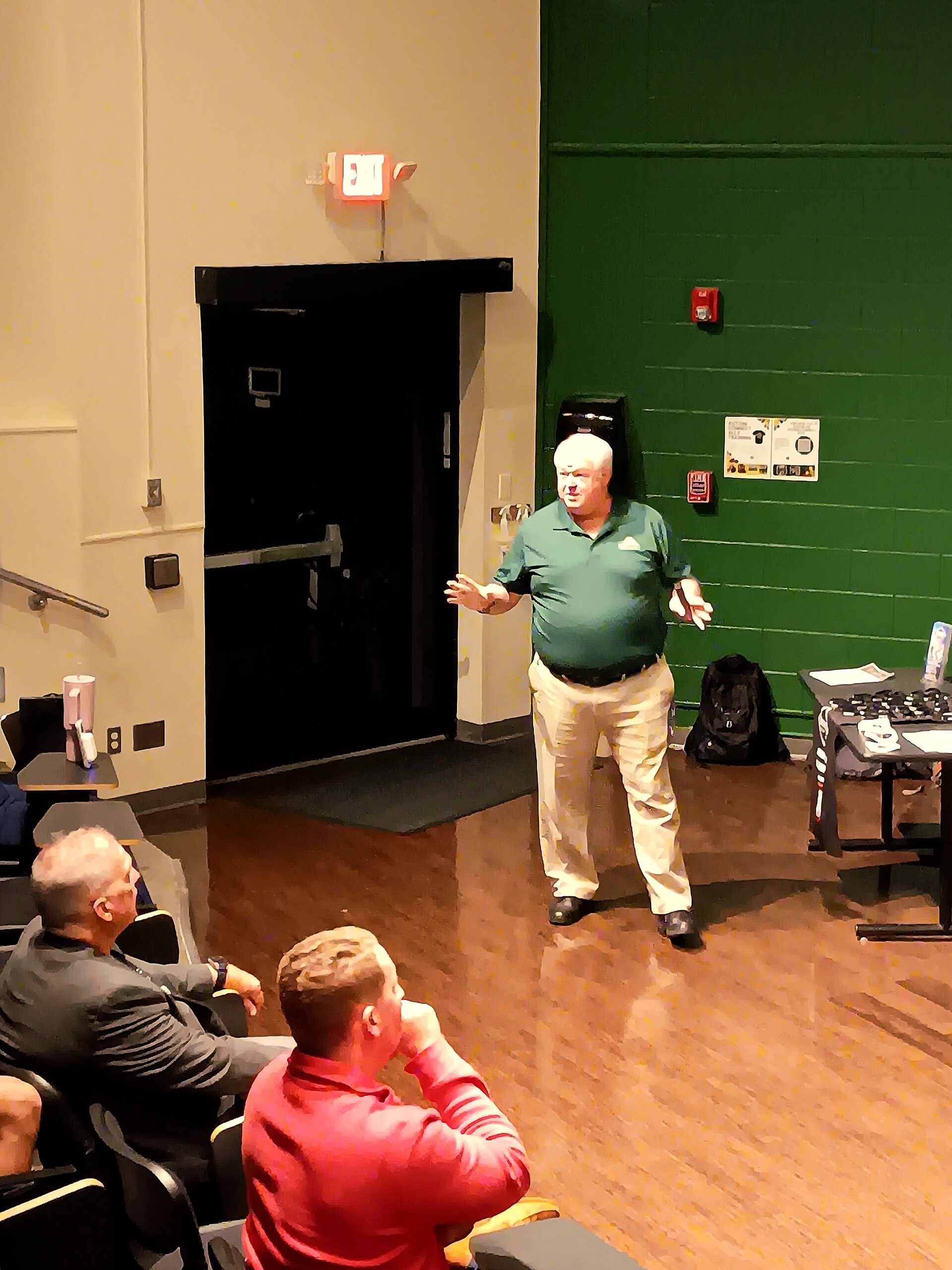
The real tragedy is that not many people are comfortable with discussing this difficult and heart-wrenching topic. According to the Law, one of the best ways to fight human trafficking is to become educated about it and what it looks like in our everyday lives.
“If you see something suspicious, … you can be anonymous and leave that information. If you know somebody that you think might be getting groomed or lured into that kind of situation as a victim, you know, be that person that says something to them, or … contact somebody about it,” said Law.
While there are different kinds of human trafficking, and it can manifest in a variety of ways, there are a few red flags to help recognize when you encounter a victim of it.
“There’s very little autonomy on the part of these victims. So as an example, … [at]nail salons,and massage parlors, and adult businesses, you’ll oftentimes see the dancers or the employees being transported together,” said Law, “and that just gives the trafficker more control over them … There’s always somebody that’s watching and monitoring what they’re doing.”
Another clue he discusses is the behavior of the victims. Most victims act distant and seem beaten down. Unfortunately, most victims will not seek rescue as they have been manipulated into seeing their trafficker as a protector and even a friend.
“There’s such a high level of disassociation with what they’re being forced to do; they just tune everything out and almost become robotic in their interactions,” said Law.
Each fall, Law offers a class called “International Sex Trafficking.” It was in this class where one of his students, Mitchell Benn, a senior majoring in Criminal Justice, realized how crucial this topic is. He asked Law to speak at an event for Saint Leo’s Turning Point USA chapter, of which Benn is the vice-president.
Benn encouraged anyone interested in similar events to join the Turning Point USA club by reaching out to the club’s Instagram page @tpusasaintleo. He hinted that having Wilkett and his team back in the Spring Semester for another presentation was a possibility being discussed.
“One thing I took away from an event is, anyone at any time of day could go online or make a phone call and request someone to fulfill their desires. However, if caught, the person who called will get charged with a misdemeanor and the victim will be charged with a felony,” remembered Benn.
“I do not understand how one can view a person or child as an object and believe they are less than them. As they say in the movie “Sound of Freedom”, ‘God’s children are not for sale’; as we are all children of God, no different from each other, regardless of our race, culture, or gender,” said Benn.
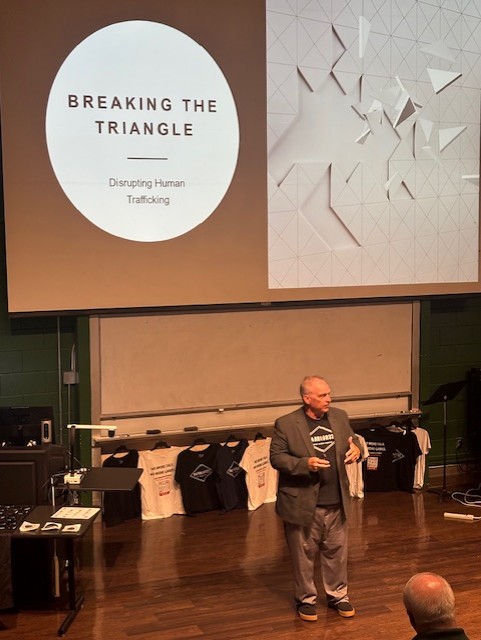
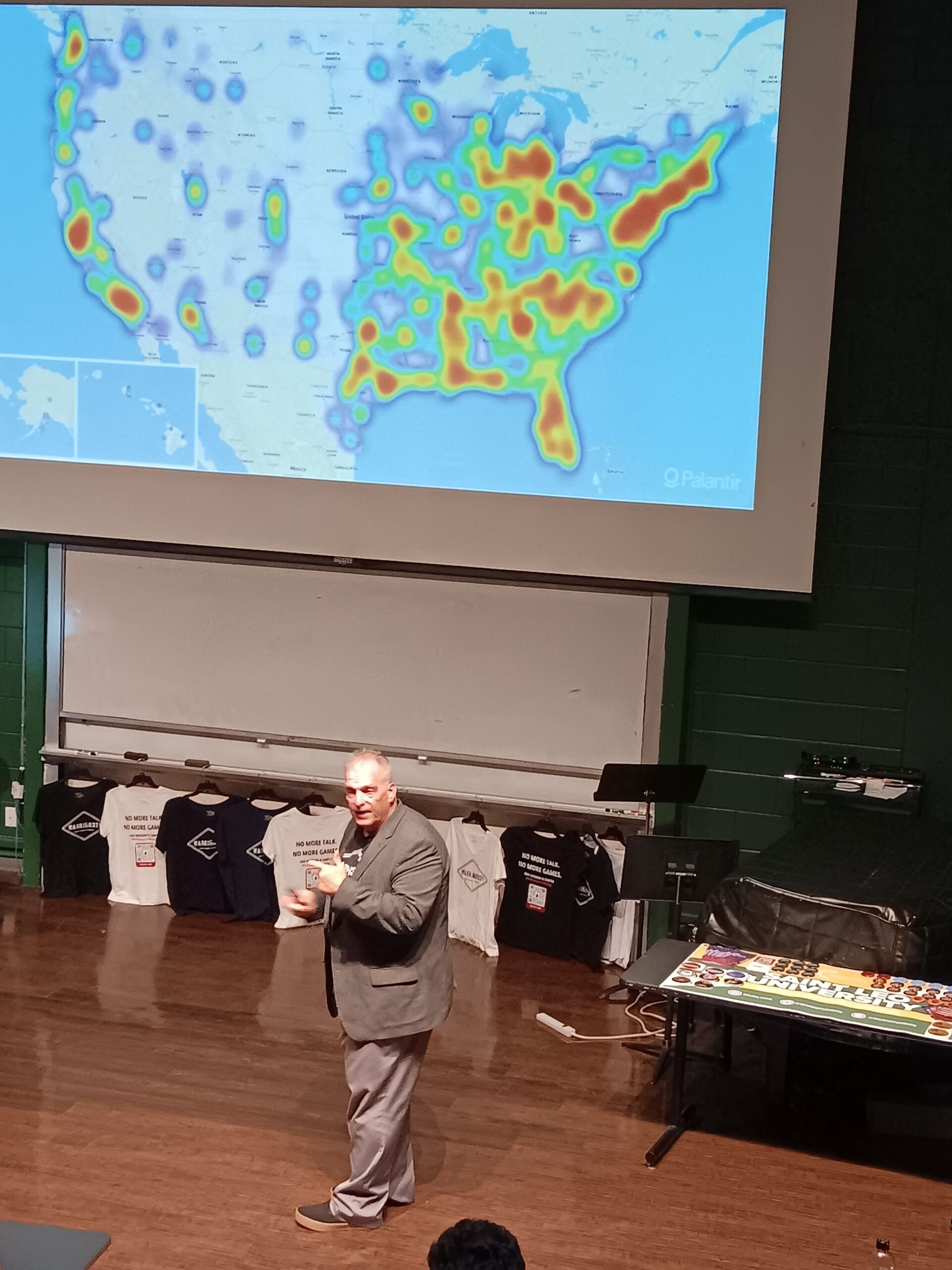
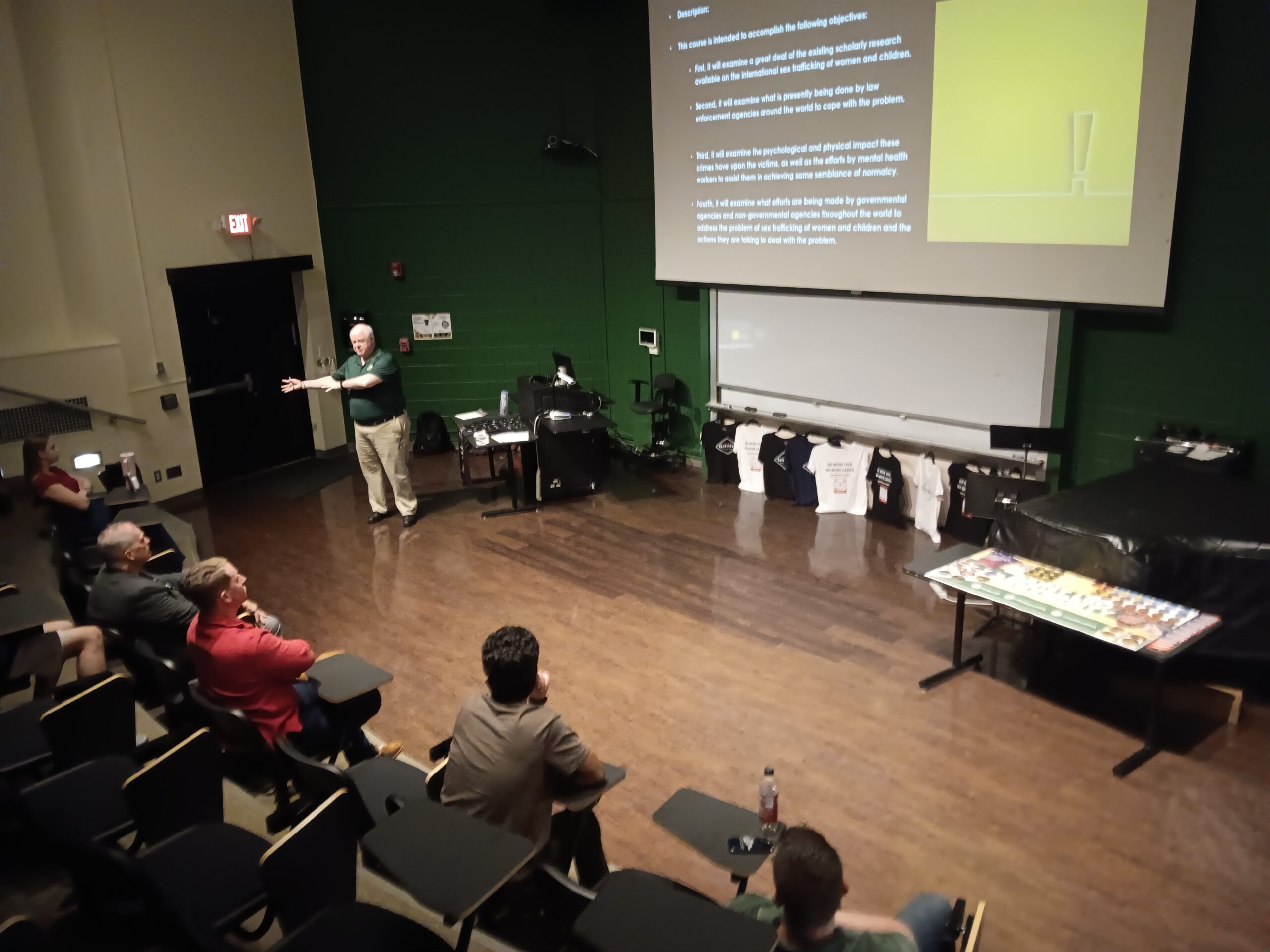
Alyssa Johler, who graduated from Saint Leo in May 2025 with a bachelor’s degree in criminal justice, now helps Wilkett combat human trafficking at Warrior 321, a local faith-based organization dedicated to educating people about human trafficking and protecting vulnerable populations. Johler explained that the numbers represent “three nails, two boards, one Savior.”
“At some point it’s just so evil that you just have to pray. There’s only so much that we can do, but we do pray for those who are current victims, [those]who are previous victims, because their life will never be the same,” said Johler.
Johler became involved with Warrior 321 after Wilkett spoke at a Saint Leo event, and she inquired about any internships that she could participate in. She soon began researching for him and even spoke on a state bill that increased the trafficking of vulnerable people groups to a capital offense—a law which Florida is the first state to pass.
“There’s so many controversies and issues in the world right now, but if there was one thing that our country could unite on—that should not be an up for an argument—we should be fighting human trafficking and putting an end to it,” Johler said.
The disgusting reality is that human trafficking is only growing. It is up to us to know the signsand lend a helping hand and a kind word to those who are vulnerable. Johler also argues that it is up to us to push politicians to remember that it is the buyers who drive the demand, and they should be prosecuted, while unfortunate victims trapped in that way of life should be rescued.
It is when people feel outcasted by society that they are more likely to fall into the cycle of human trafficking. Johler discusses how even the smallest gesture of kindness can help someone feel cared for and resist falling into the evil trap.
“Even if you just see someone who’s homeless or vulnerable and just making them feel seen by going up to them and having a conversation; it only takes five minutes out of your day to make someone feel seen,” said Johler.
Speaking to victims still trapped in human trafficking, Johler said: “I see you, I hear you, and I love you. You are worth it, and I will be the voice for you that you may not have right now, but I will always support you. And it is not your fault.”
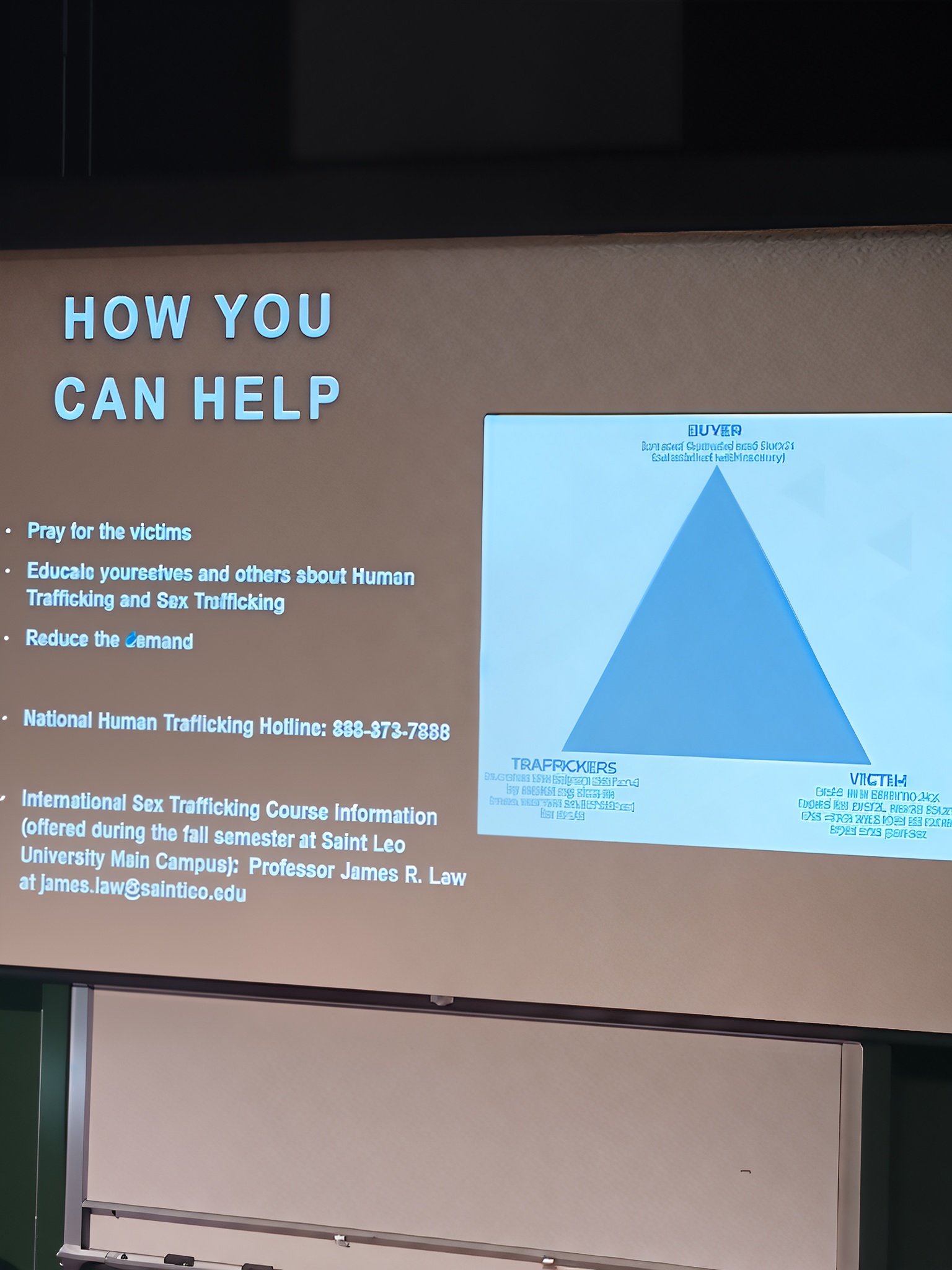
While organizations like Warrior 321 work hard to combat human trafficking, it is up to individual efforts to put an end to this despicable practice. Every person has the power to help disrupt the cycle of human trafficking, whether it’s direct involvement or things as simple as holding lawmakers accountable in elections, taking time to learn the signs of human trafficking, reporting a tip, or even a few kind words to a stranger.